The African safari industry has never had more technology choices. From itinerary builders to full booking engines, a wave of platforms now serve tour operators, property owners, and travelers. We respect every company on this list — they've each pushed the industry forward. But we also believe SafariSync does something none of them do alone.
Here's an honest, no-spin breakdown of the platforms shaping safari technology in 2026 — what each does well, who they serve best, and where SafariSync fits in the picture.
1. Wetu — The Content Network Pioneer
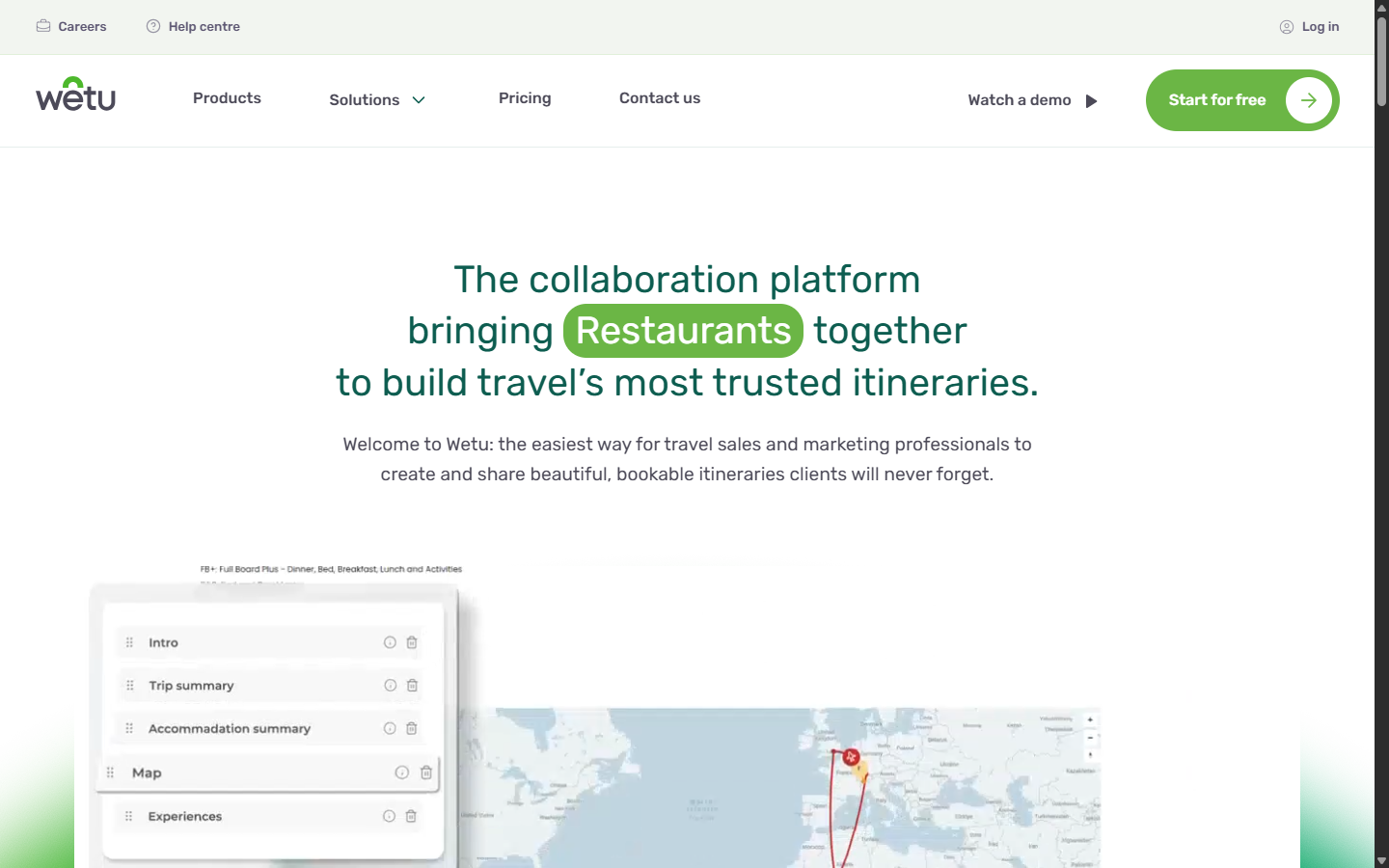
Website: wetu.com
Wetu, headquartered in Cape Town, built the largest shared content database in African tourism. Suppliers upload their own photos, descriptions, and rates. Operators pull that content into polished itineraries without starting from scratch. The network effect is real — once your suppliers are on Wetu, switching costs are high.
What they do best: If you need a centralized content library where 500+ African suppliers already maintain their own listings, Wetu is the platform that made that possible. Their itinerary presentations are clean and professional.
Best for: DMCs and operators who want access to a pre-built supplier content network and primarily need an itinerary presentation tool.
2. SafariOffice — The Low-Barrier Sales Tool
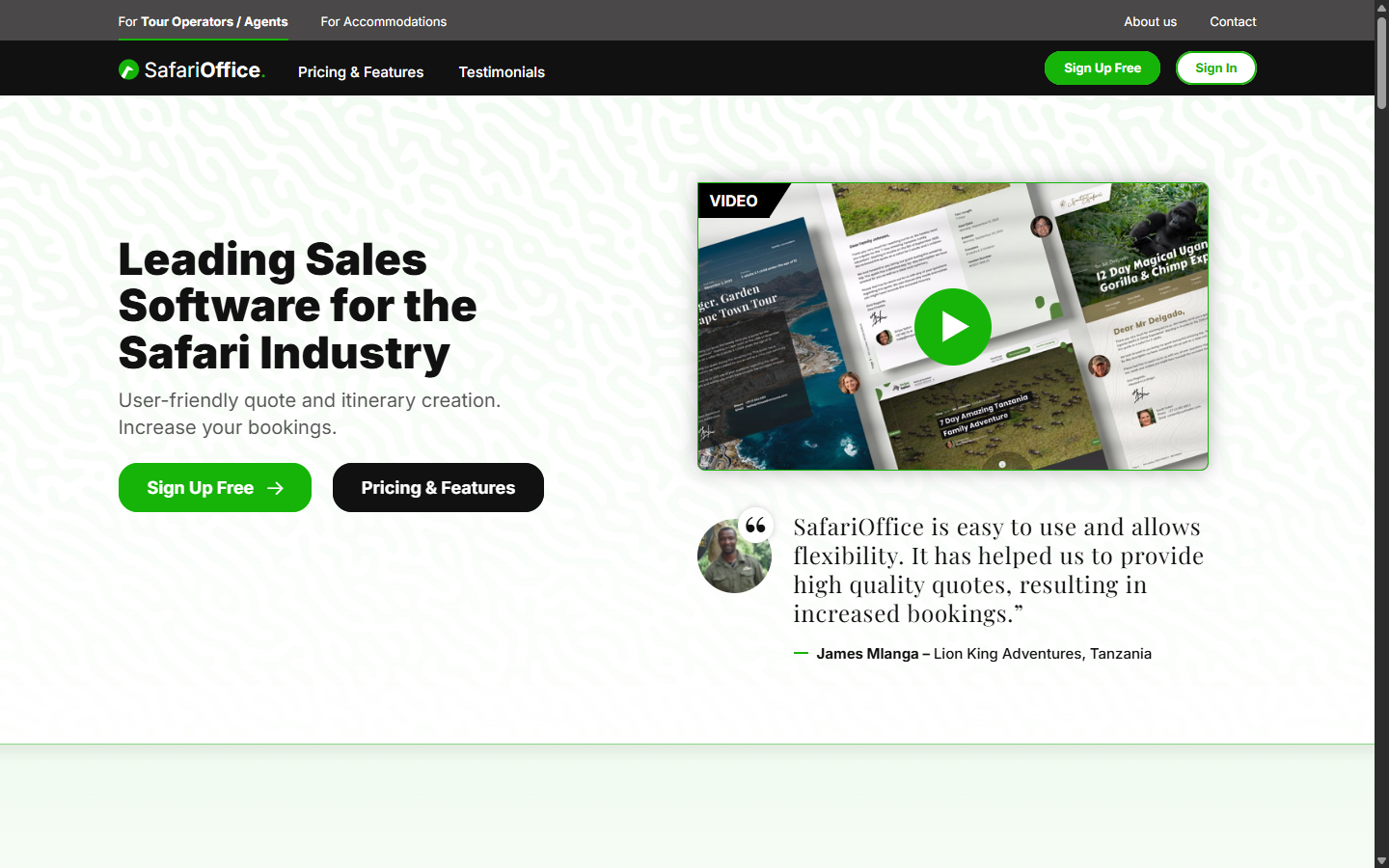
Website: safarioffice.com
SafariOffice removed the financial barrier to entry. Their first two users are free — that's a genuine gift to small operators just getting started. The drag-and-drop quote builder tracks when clients open and view proposals, giving sales teams visibility into engagement.
What they do best: Getting small safari operators onto professional software without asking for a credit card upfront. Their client engagement tracking (knowing when a prospect opened your quote) is a smart feature many larger platforms still lack.
Best for: Small safari operators (1-2 person teams) who need quoting software and aren't ready to pay for an enterprise platform.
3. EasyOTA — The No-Risk Revenue Model
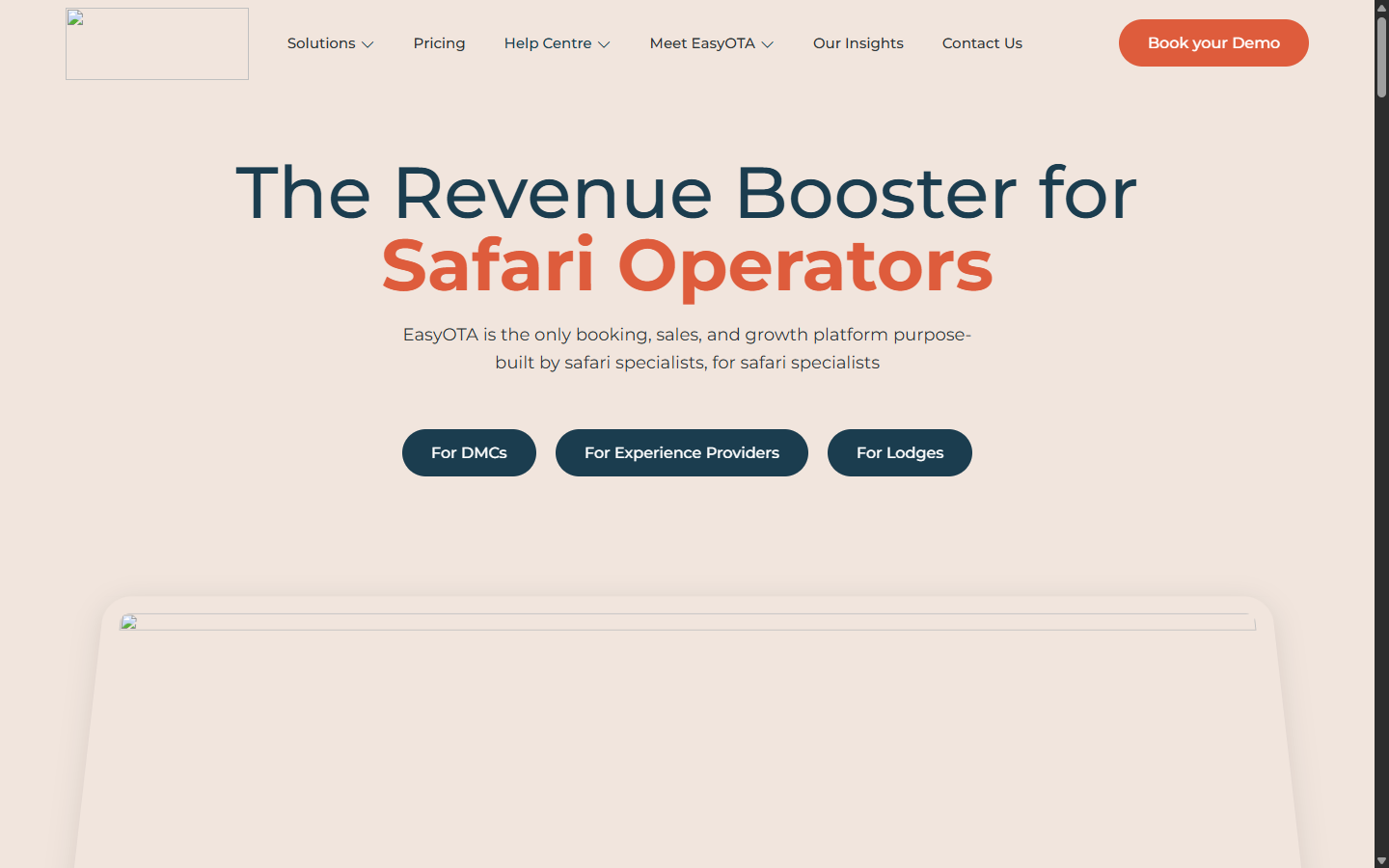
Website: easyota.com
EasyOTA flipped the pricing model: no subscription fees, you only pay when you receive bookings. For safari lodges and experience providers worried about software costs during low season, this is genuinely compelling. They handle quoting with live availability, NET pricing, and custom markups.
What they do best: Aligning their revenue with yours. When you don't book, you don't pay. That takes real confidence in your product and removes risk for operators testing new technology.
Best for: Safari lodges and experience providers who want zero fixed costs and are comfortable with a commission-based model.
4. Tashi — The Modular Lodge System
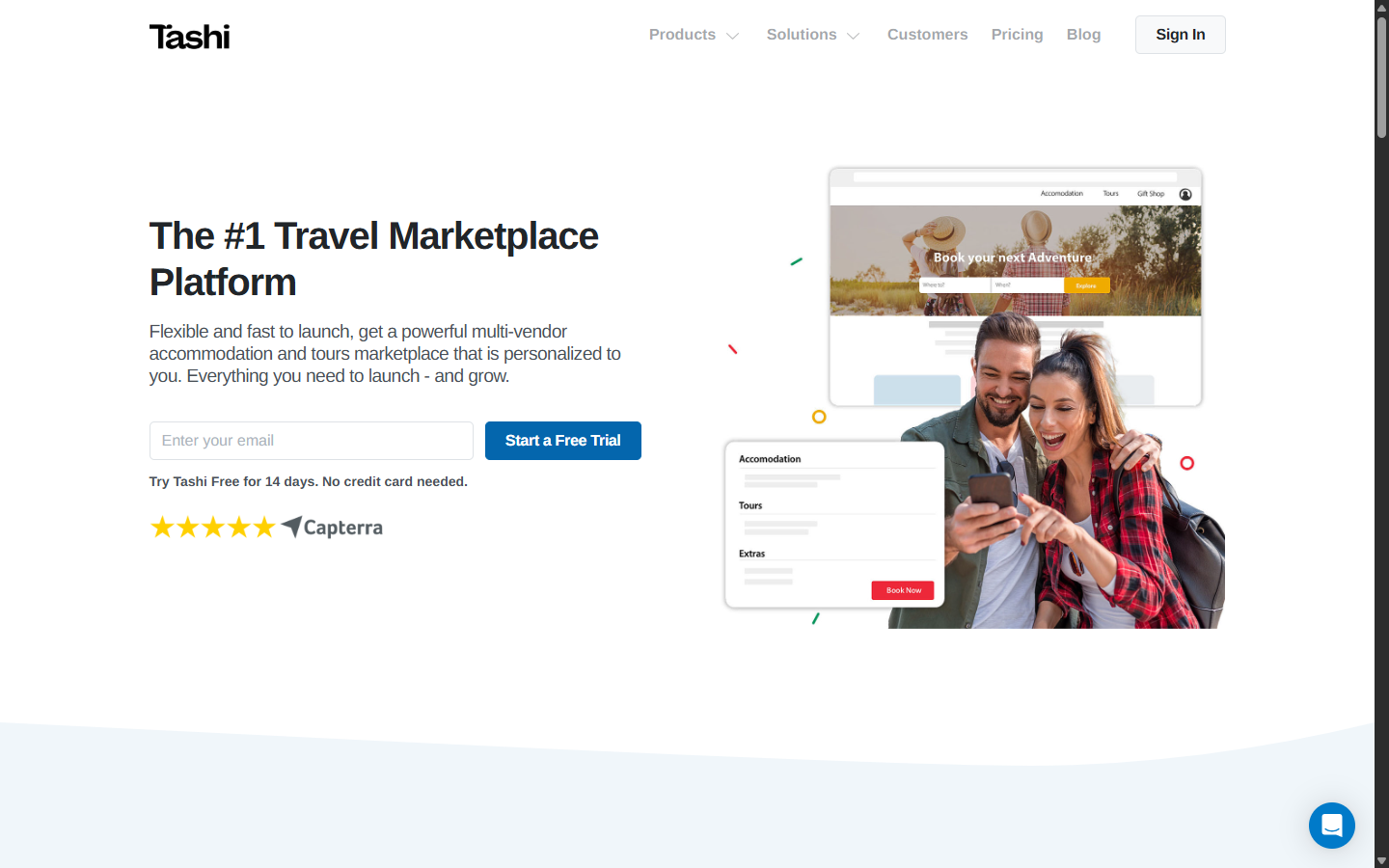
Website: tashi.travel
Tashi stands out with modular pricing starting at $29/month and a dedicated Safari Lodge Management System (PMS). Most platforms force you to buy everything — Tashi lets you start with a booking engine and add a channel manager or guest communications when you're ready.
What they do best: Covering both the operator side and the property management side in one modular system. Their PMS for safari lodges is purpose-built, not a generic hotel PMS with a safari skin.
Best for: Safari lodge owners who need property management alongside booking capabilities, and want to scale their software spend gradually.
5. Safari Portal — The Luxury Traveler App
Website: safariportal.app
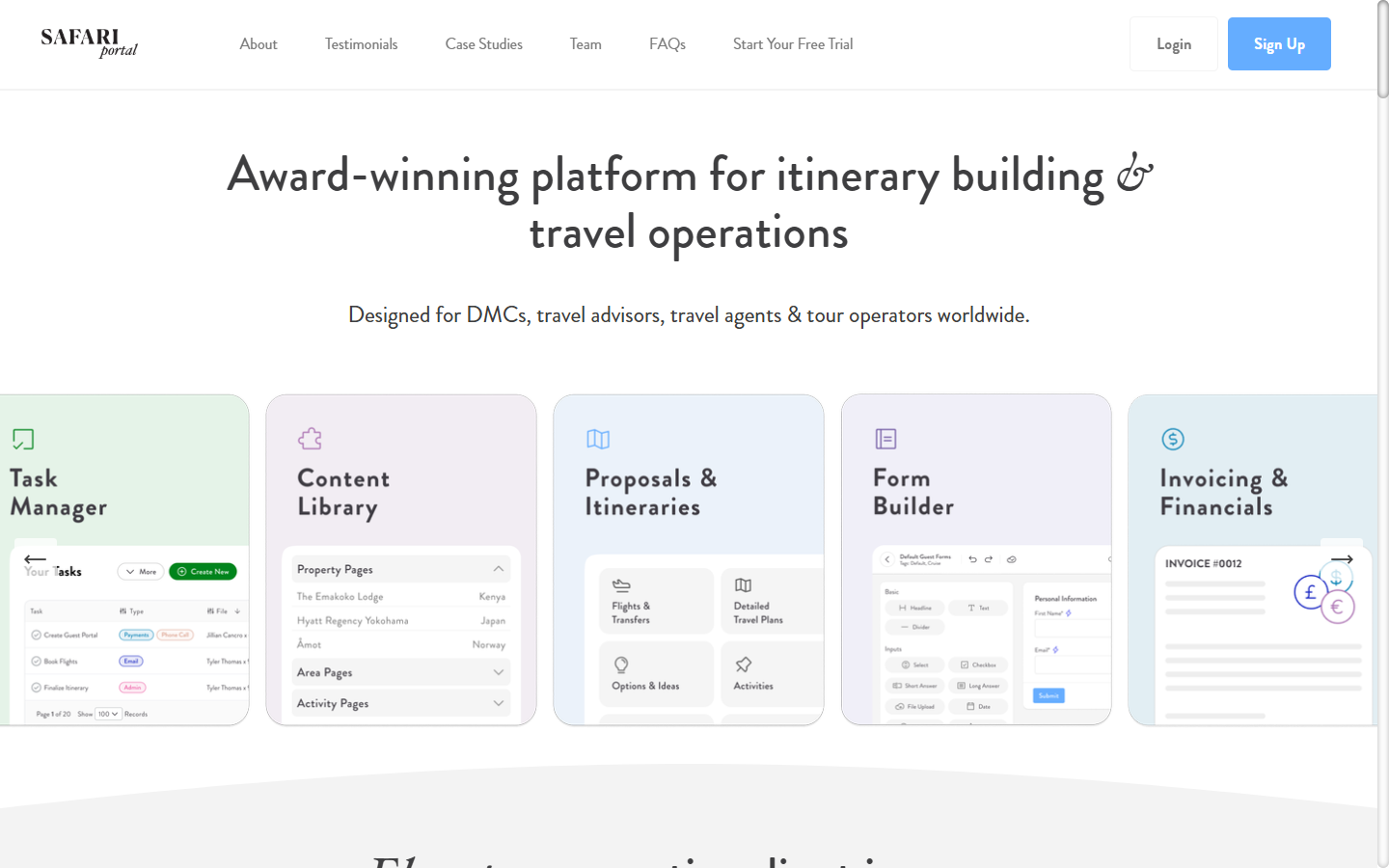
Safari Portal targets the high-end segment with a white-labeled traveler mobile app. Trip countdowns, two-way messaging, push notifications, and offline access — for luxury safari operators, this is the kind of polished client experience that justifies premium pricing.
What they do best: The traveler-facing mobile app with offline capabilities. When your clients are in the Serengeti without cell signal, having their full itinerary, maps, and documents available offline is a genuine differentiator.
Best for: High-end travel advisors and luxury DMCs where the client experience needs to match the $15,000+ trip price tag.
6. SafariBookings.com — The Marketplace Giant
Website: safaribookings.com
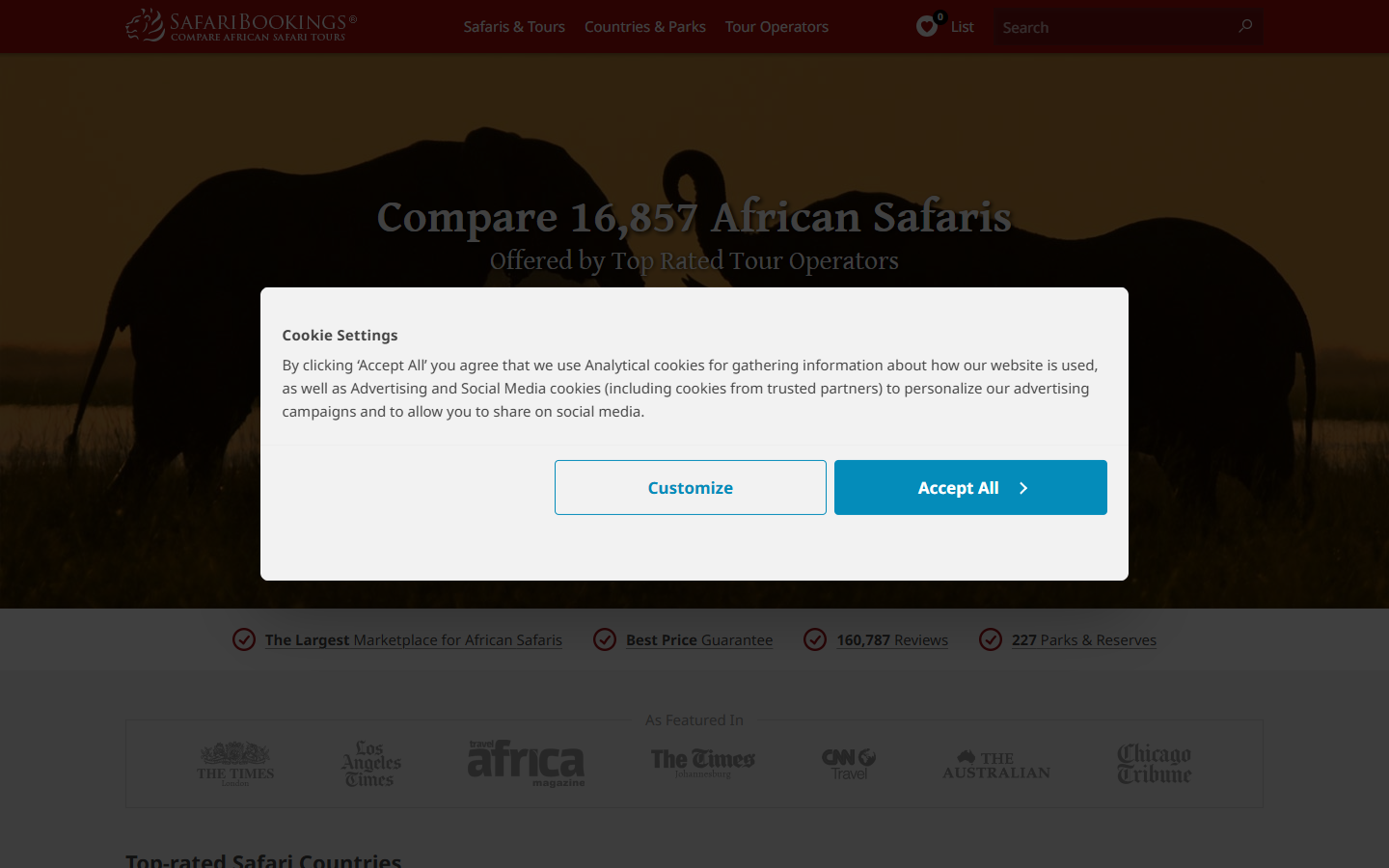
SafariBookings.com is the world's largest online safari marketplace. They dominate search engine results for safari-related queries and send leads directly to operators. It's not an operator tool — it's a lead generation machine.
What they do best: Pure volume. If you want eyeballs on your safari packages from travelers actively searching, SafariBookings has built the audience that most operators can't build alone. Their SEO dominance is earned over years of consistent content.
Best for: Operators who need a lead pipeline and are willing to compete on a marketplace where travelers compare multiple offers side by side.
7. Tourplan — The Enterprise Incumbent
Website: tourplan.com
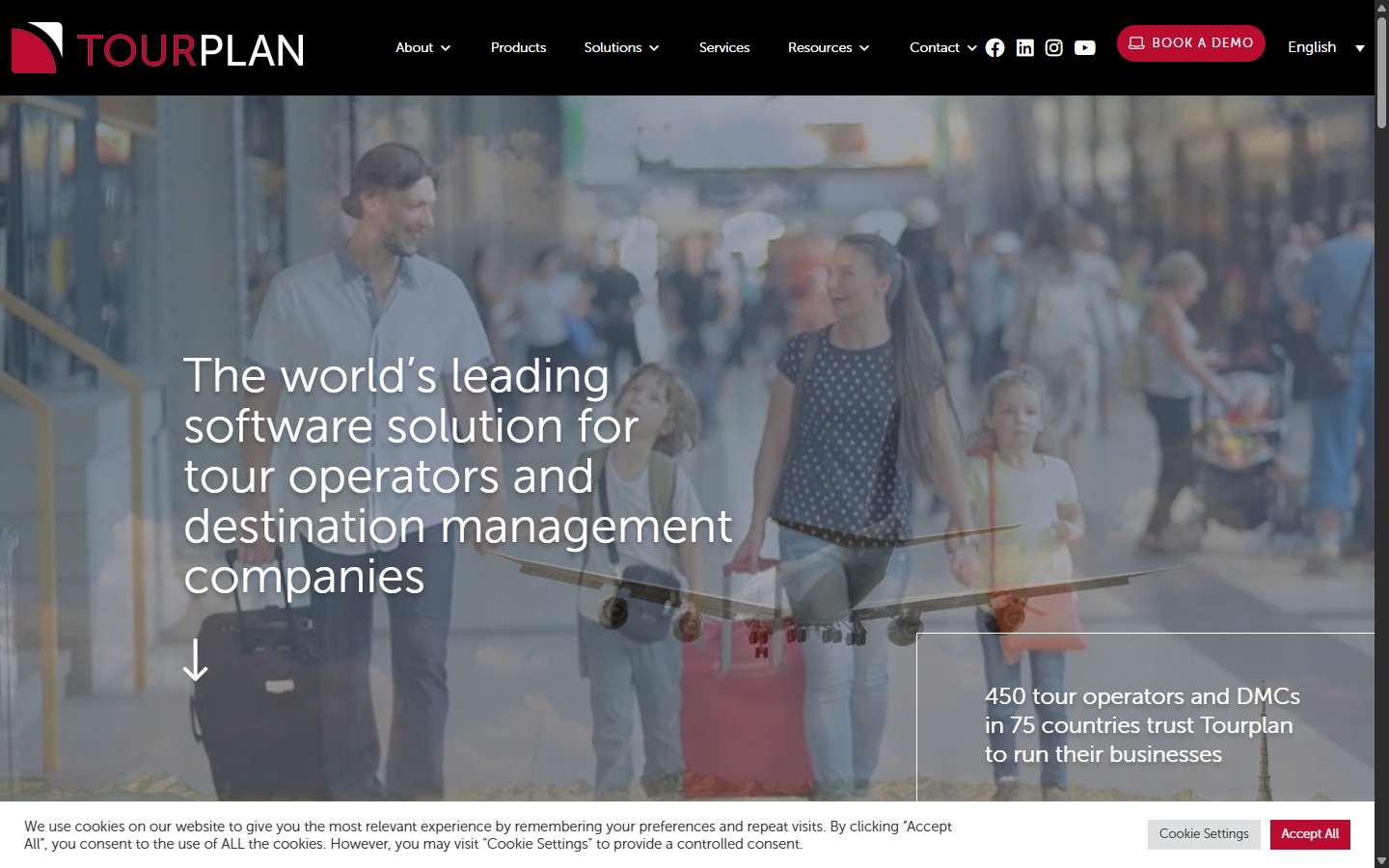
Tourplan has been in the game since 1986 — four decades of serving 450+ operators in 70 countries. Their operational and financial depth is unmatched: multi-itinerary bookings, automated supplier communications, FOC costing, and amendments with automatic recalculations.
What they do best: Handling complexity at scale. If you run a large DMC processing thousands of bookings with intricate supplier contracts and multi-currency finances, Tourplan's depth is hard to replicate. They've had 40 years to solve edge cases.
Best for: Mid-to-large DMCs and tour operators who need enterprise-grade financial and operational management and have the budget to match.
8. Tourwriter — The Boutique Operator's OS

Website: tourwriter.com
Tourwriter built an end-to-end system for boutique operators crafting bespoke, multi-day itineraries. Margins, commissions, and taxes recalculate in real-time as you adjust an itinerary. Integrated Stripe payments and Xero accounting close the financial loop.
What they do best: Financial automation for custom travel. When you change a single hotel in a 14-day itinerary, every margin and commission recalculates instantly. For operators who build 50+ unique itineraries per month, that time savings compounds fast.
Best for: Boutique tour operators and DMCs who craft custom multi-day journeys and need tight financial control without a finance team.
9. Orioly — The Direct Booking Enabler
Website: orioly.com
Orioly's mission is reducing OTA dependency for small operators. Their booking engine, inventory manager, and channel manager work together to help you drive direct bookings from your own website rather than paying 20-30% commissions to online travel agencies.
What they do best: Simplicity. Orioly's interface is designed for operators who aren't tech-savvy. If your team struggles with complex software, Orioly gets you online bookings with minimal training.
Best for: Small to mid-size tour and activity operators who want to reduce OTA commissions by driving direct website bookings.
10. WeTravel — The Payment-First Platform
Website: wetravel.com
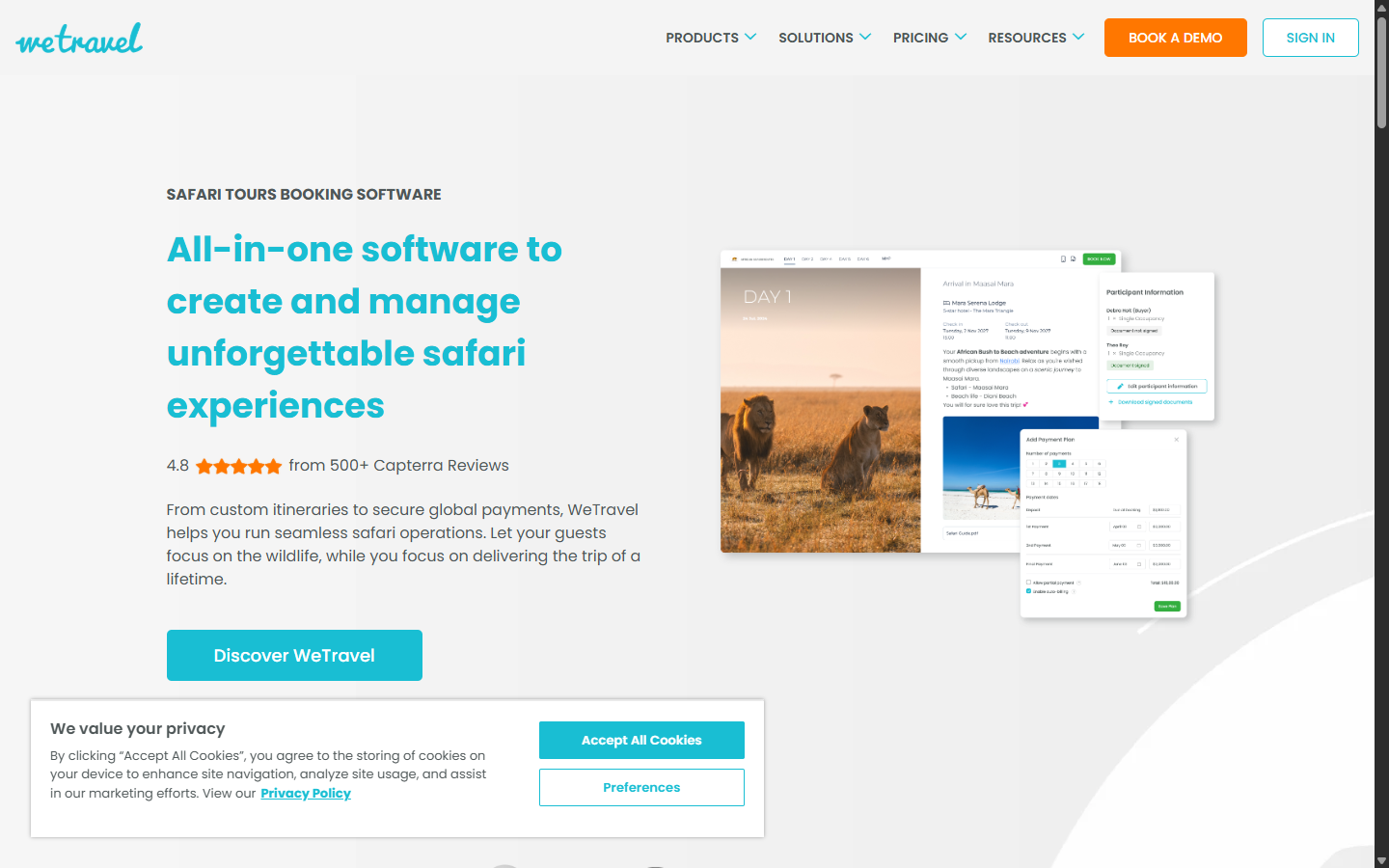
WeTravel solved a problem most safari platforms ignore: collecting money. Deposits, installment plans, group payment splitting across currencies — for multi-day safari trips where clients pay $5,000-$20,000 in stages, WeTravel makes the money flow smooth.
What they do best: Payment collection for high-value group trips. When 12 travelers need to split a $60,000 group safari across 4 installments in 3 different currencies, WeTravel handles it without spreadsheets.
Best for: Multi-day trip organizers and group travel operators who need flexible payment collection above all else.
11. TicketingHub — The Distribution Network
Website: ticketinghub.com
TicketingHub connects operators to Viator, GetYourGuide, and Google Things to Do through a single booking engine. Their embeddable widget turns any website into a booking channel. Commission-based pricing means no monthly subscription risk.
What they do best: OTA distribution. If your primary goal is getting your safari listed on every major online travel agency simultaneously, TicketingHub's channel network does the heavy lifting.
Best for: Tour and activity operators who want maximum OTA visibility with a single integration point.
12. Tukio — The AI Itinerary Builder
Website: gotukio.com
Tukio is an African startup taking a consumer-first approach: travelers select destinations, dates, budget, and group size, then an algorithm compiles a complete safari itinerary. No agent needed. It's a bold bet on self-service safari booking.
What they do best: Removing the agent from the equation for travelers who want to plan independently. Their smart wizard is a glimpse at where consumer safari booking is heading.
Best for: Tech-savvy travelers who prefer building their own safari rather than working with a traditional travel agent.
So Where Does SafariSync Fit?
Every platform above solves one or two problems well. Wetu handles content. WeTravel handles payments. SafariBookings generates leads. Tashi manages lodges. Tourwriter automates finances.
SafariSync is the only platform that connects all four sides of the African safari industry in one system: tour operators, property owners, travel agents, and travelers.
Here's specifically what that means:
One Platform, Four Apps
SafariSync runs four purpose-built applications on a single database:
- B2B Dashboard — Tour operators and property owners manage bookings, itineraries, finances, staff, fleet, inventory, housekeeping, maintenance, guest experiences, and supplier relationships
- Traveler Marketplace — Travelers discover tours, compare operators, read verified reviews, and submit inquiries that become leads
- Agent Portal — Travel agents manage clients, build quotes, track commissions, and access training resources
- SafariPulse — Independent, verified reviews that build trust across the entire safari ecosystem
The Partnership Model No One Else Has
Safari tourism runs on partnerships. A tour operator in Arusha works with lodges in Serengeti, camps in Ngorongoro, and transfer companies in between. SafariSync is the only platform where operators and property owners connect directly within the system to build and manage itineraries together — not via email, not via phone, not via a third-party content database.
Pay-Per-Lead, Not Pay-Per-Month
Most platforms charge monthly subscriptions regardless of whether you get business. SafariSync's wallet system charges operators only when they accept a lead — meaning you pay for actual business opportunities, not software access. Top up your wallet, review incoming leads, accept the ones that match your capacity. No lead, no charge.
Operations Suite Built for Safari Realities
While most competitors focus on sales and itineraries, SafariSync includes a full operations suite that reflects how safari businesses actually run day to day:
- Drag-and-drop calendar with occupancy heat maps
- Check-in/check-out management and arrival boards
- Housekeeping, maintenance tracking, and room inspections
- Fleet management and transfer manifests
- Staff scheduling and shift handover
- Guest dietary dashboards, waivers, and welcome packs
- Incident reports, key handover logs, and safety compliance
- Inventory management, expense tracking, and revenue forecasting
- Seasonal pricing engine and competitor rate monitoring
This isn't a booking tool with operations bolted on. This is a complete business management system that happens to include world-class booking and itinerary capabilities.
African Payment Infrastructure
Safari businesses in East Africa don't run on Stripe. SafariSync integrates with PesaPal — supporting M-Pesa, mobile money, and local card payments. When a lodge in Tanzania needs to process a payment from a traveler in Nairobi, the money moves through channels that actually work in this region.
Channel Management
SafariSync connects to Booking.com and Expedia through built-in channel adapters with sync engines and circuit breakers — keeping your availability consistent across platforms without manual updates. Airbnb integration is in development.
Real-Time Everything
Bookings, calendar updates, and notifications flow in real-time. When a traveler submits an inquiry on safarisync.com, the operator sees it instantly on the B2B dashboard. When a booking is confirmed, the calendar updates for everyone. No refresh buttons, no sync delays.
Built for African Safari Businesses, Not Adapted for Them
The most important difference is intent. Tourplan, Tourwriter, Orioly, and TicketingHub are global platforms that safari operators can use. SafariSync was designed from day one for the specific workflows, partnerships, payment methods, and operational realities of African safari tourism. Every feature decision is filtered through one question: does this help an African safari business serve travelers better?
The Honest Summary
| Capability | SafariSync | Most Competitors |
|---|---|---|
| Itinerary builder | Yes (5-step wizard + AI) | Yes (most platforms) |
| Traveler marketplace | Built-in B2C site | Only SafariBookings.com |
| Operator-property partnerships | Native partnership system | None |
| Travel agent portal | Full agent app with CRM | Rare (Wetu partially) |
| Pay-per-lead model | Wallet-based lead system | SafariBookings only |
| Full operations suite | 20+ operational modules | Tashi (PMS only) |
| African payments (M-Pesa) | PesaPal integration | WeTravel (partial) |
| Channel management (OTAs) | Booking.com + Expedia | EasyOTA, Tashi, TicketingHub |
| Independent review platform | SafariPulse | None (rely on TripAdvisor) |
| Real-time updates | Live sync | Most use polling/manual refresh |
| Multi-tenant SaaS | Full tenant isolation | Tourplan, Tourwriter |
Every Platform Has Its Place
We're not here to tell you the other platforms are bad — they're not. Wetu's content network is brilliant. Tourplan's 40-year depth is irreplaceable for large enterprises. EasyOTA's no-risk pricing is genuinely innovative. SafariBookings drives real leads.
But if you're an African safari business looking for one platform that handles your bookings, operations, partnerships, guest experience, finances, staff, fleet, compliance, traveler marketplace, agent network, and review system — without stitching together five different tools and paying five different subscriptions — SafariSync is the platform built to do exactly that.
We didn't build SafariSync because the industry needed another itinerary tool. We built it because African safari businesses deserve a complete platform designed specifically for how they operate — from the first traveler inquiry to the post-safari review.
Ready to see the difference? Visit SafariSync or start your free account.
Frequently Asked Questions
What is the best safari booking software in 2026?
The best safari booking software depends on your specific needs. For a complete platform connecting tour operators, property owners, travel agents, and travelers in one system, SafariSync offers the most comprehensive solution. For content-focused itinerary building, Wetu leads the market. For enterprise-scale operations, Tourplan has 40 years of depth. For zero-cost entry, SafariOffice offers free accounts for up to 2 users.
How much does safari management software cost?
Costs vary widely across the market. SafariOffice offers a free tier for 2 users. Tashi starts at $29/month. Tourwriter ranges from $99-$299/user/month. EasyOTA and TicketingHub charge only per booking (no monthly fee). SafariSync uses a pay-per-lead model where operators are only charged when they accept a qualified lead, plus subscription options for property owners. Tourplan uses custom enterprise pricing.
Can I manage both safari tours and lodge operations in one platform?
Very few platforms handle both. SafariSync is purpose-built for this — its B2B dashboard covers tour itineraries, bookings, and a full property operations suite including housekeeping, maintenance, fleet management, staff scheduling, guest experience tools, and financial reporting. Tashi also offers a Safari Lodge Management System (PMS) alongside its booking engine. Most other platforms focus on either operator sales or property management, not both.
Which safari platforms support M-Pesa and African mobile money payments?
SafariSync integrates directly with PesaPal, supporting M-Pesa, Tigo Pesa, Airtel Money, and local card payments across East Africa. WeTravel supports multi-currency payments but focuses primarily on international card payments. Most global platforms like Tourwriter integrate with Stripe, which has limited coverage in many African markets. For operators in Tanzania, Kenya, and Uganda, native mobile money support is a significant factor in choosing a platform.
What is the difference between SafariSync and SafariBookings?
SafariBookings.com is a traveler marketplace — it helps travelers compare safari offers and generates leads for operators. It does not provide operator management tools, property operations, or agent portals. SafariSync includes a traveler marketplace similar to SafariBookings, but also provides a full B2B operator dashboard, an agent portal, an independent review platform (SafariPulse), and 20+ operational management modules. Think of SafariBookings as the lead funnel, and SafariSync as the complete business system that includes the funnel.