Madagascar Safari Guide
The world's fourth-largest island and a biodiversity hotspot like no other — 90% of its wildlife is found nowhere else on Earth, from lemurs to baobabs to chameleons.
Written by SafariSync Experts
Arusha, Tanzania — on-the-ground knowledge
About Madagascar
Madagascar is not just a destination — it is an entirely separate natural world. Isolated from the African mainland for 88 million years, the island has evolved a collection of wildlife so unique that 90% of its species are found nowhere else on Earth. This level of endemism is unmatched by any comparable land mass, making Madagascar a living laboratory of evolution.
The stars of Madagascar's wildlife show are the lemurs — over 100 species ranging from the tiny mouse lemur (the world's smallest primate) to the acrobatic sifaka and the haunting call of the indri. These charismatic primates, ancestors of all the world's monkeys and apes, are found only here, and encountering them in their forest habitats is one of the most joyful wildlife experiences anywhere.
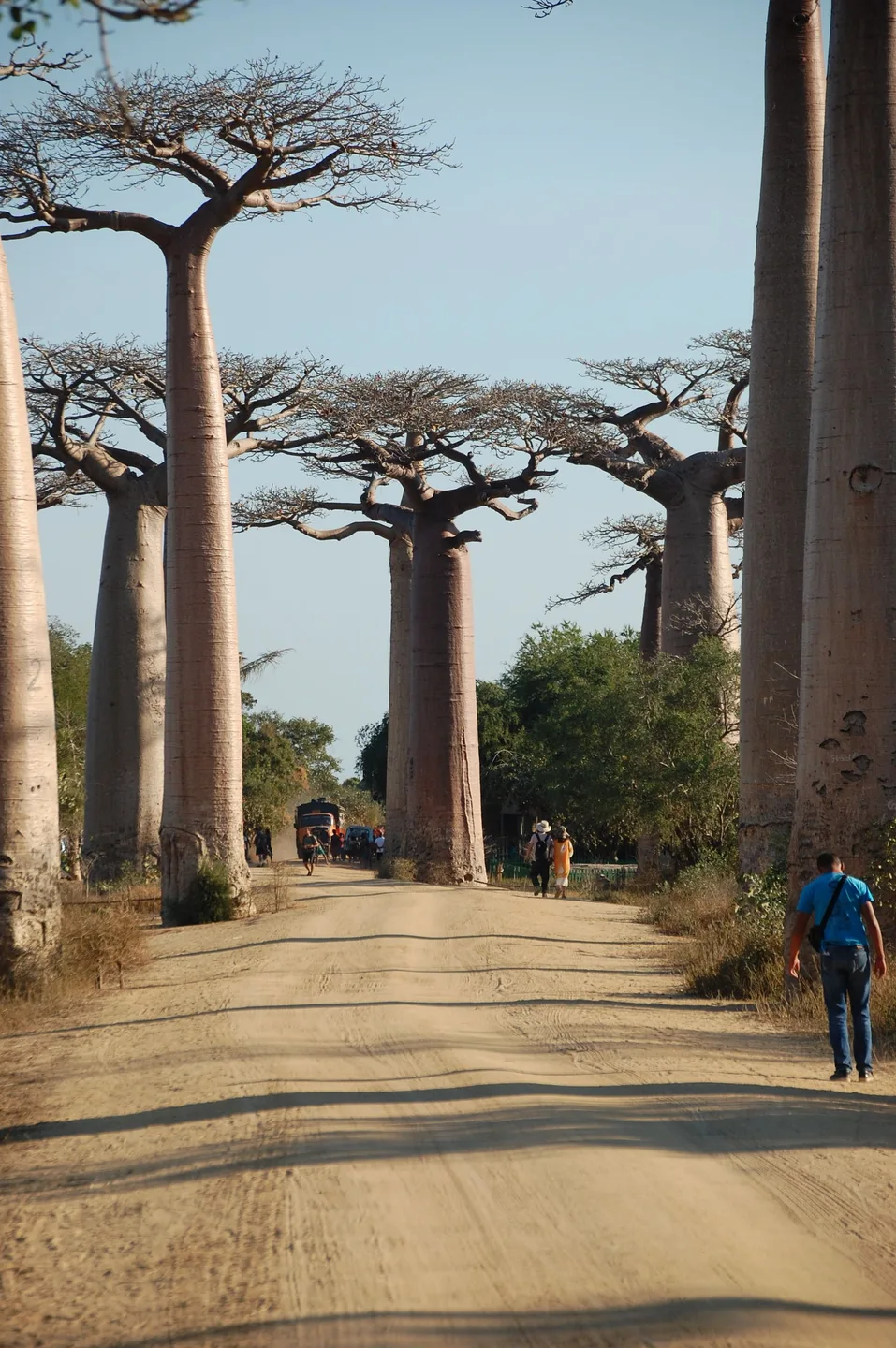
Beyond lemurs, Madagascar harbours over half the world's chameleon species, bizarre tenrecs, the strange fossa (the island's top predator), and a kaleidoscope of reptiles, frogs, and insects found nowhere else. The landscapes are equally extraordinary — from the otherworldly limestone pinnacles of the Tsingy to the majestic Avenue of the Baobabs, from the lush eastern rainforests to the spiny deserts of the south.
Madagascar is not a typical safari destination — it requires patience, flexibility, and comfort with basic infrastructure. But for those drawn to the world's most unique ecosystems and the thrill of encountering creatures found on no other place on Earth, it is simply irreplaceable.
Why Visit Madagascar
Best Time to Visit Madagascar
The dry season from April to October is the best time to visit, with cooler temperatures, less rain, and better road conditions. September and October are ideal for lemur activity and wildflower blooms.
The wet season from November to March brings cyclone risk to the east coast, heavy rain that makes many roads impassable, and intense heat. Whale watching off Ile Sainte-Marie peaks from July to September. The south and west are drier year-round.
What a Madagascar Safari Costs
Madagascar is one of Africa's most affordable destinations. Budget guesthouses (hotely) from $10-30/night. Mid-range hotels $40-120/night. Luxury eco-lodges $150-500/night.
Guided park visits cost $15-30 per person including guide fees and entry. Internal flights range from $100-300 one way. A 14-day circuit covering the highlights costs $1,500-3,000 budget or $3,000-6,000 mid-range per person. Hiring a 4x4 with driver is often more practical than self-drive ($50-100/day).
Getting to Madagascar
Ivato International Airport (TNR) near Antananarivo receives flights from Paris, Nairobi, Johannesburg, and Mauritius. Air Madagascar and Air France are the main carriers.
Most nationalities receive a 30-day visa on arrival ($35). Internal flights connect major destinations but schedules are limited and delays common. The road network is often in poor condition — a 4x4 with driver/guide is strongly recommended for overland travel. Distances take much longer than expected due to road conditions.
Madagascar Safari — Frequently Asked Questions
What is the best time to visit Madagascar?
The dry season from April to October is the best time to visit, with cooler temperatures, less rain, and better road conditions. September and October are ideal for lemur activity and wildflower blooms. The wet season from November to March brings cyclone risk to the east coast, heavy rain that makes many roads impassable, and intense heat. Whale watching off Ile Sainte-Marie peaks from July to September. The south and west are drier year-round.
How do I get to Madagascar?
Ivato International Airport (TNR) near Antananarivo receives flights from Paris, Nairobi, Johannesburg, and Mauritius. Air Madagascar and Air France are the main carriers. Most nationalities receive a 30-day visa on arrival ($35). Internal flights connect major destinations but schedules are limited and delays common. The road network is often in poor condition — a 4x4 with driver/guide is strongly recommended for overland travel. Distances take much longer than expected due to road conditions.
How much does a Madagascar safari cost?
Madagascar is one of Africa's most affordable destinations. Budget guesthouses (hotely) from $10-30/night. Mid-range hotels $40-120/night. Luxury eco-lodges $150-500/night. Guided park visits cost $15-30 per person including guide fees and entry. Internal flights range from $100-300 one way. A 14-day circuit covering the highlights costs $1,500-3,000 budget or $3,000-6,000 mid-range per person. Hiring a 4x4 with driver is often more practical than self-drive ($50-100/day).
What are the top things to see in Madagascar?
Madagascar is renowned for: Over 100 lemur species found nowhere else, Avenue of the Baobabs iconic sunset, Tsingy de Bemaraha razor-sharp limestone pinnacles, Chameleons — over half of all world species, Whale watching (Jul-Sep), Rainforest, desert, and beach diversity. The exact wildlife and experiences depend on the season and specific areas you visit.
Can I book a Madagascar safari through SafariSync?
Absolutely. SafariSync connects you with verified safari operators who run tours in Madagascar. Submit an inquiry and our operators will craft a custom itinerary tailored to your dates, budget, and interests.
Why Trust This Guide
This guide is written and maintained by the SafariSync team in Arusha, Tanzania, drawing on our direct relationships with the operators and lodges we list.