Masai Mara Safari Guide
Kenya's most famous reserve — rolling grasslands hosting the Great Migration's dramatic river crossings and one of Africa's highest concentrations of big cats.
Written by SafariSync Experts
Arusha, Tanzania — on-the-ground knowledge
About Masai Mara
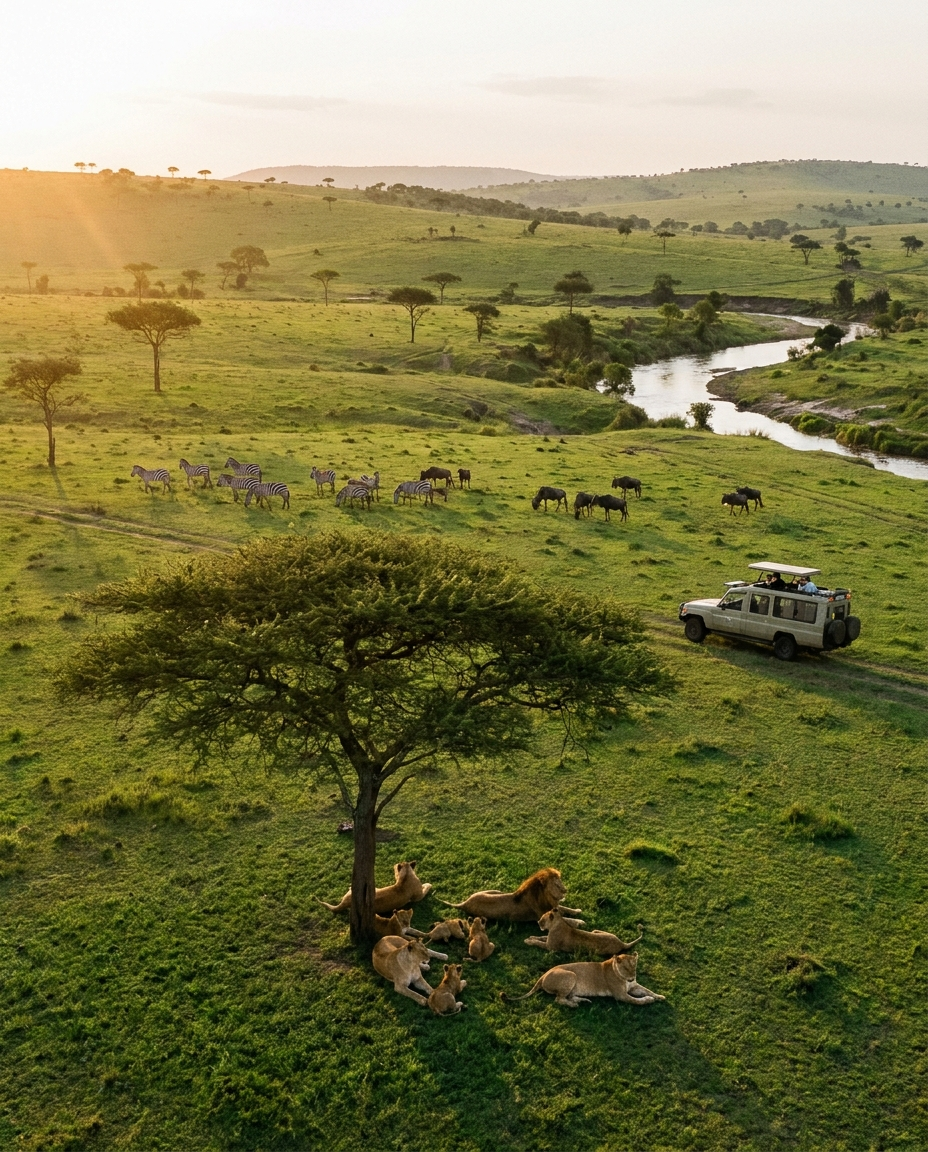
The Masai Mara is Kenya's most celebrated wildlife destination — a vast expanse of rolling grassland, acacia woodland, and the winding Mara River that together support one of the highest concentrations of wildlife in Africa. The reserve and its surrounding conservancies cover over 1,500 square kilometres of prime savanna habitat.
The Great Migration reaches the Mara from July to October, with over two million wildebeest, zebra, and gazelle crossing the crocodile-infested Mara River in chaotic, dramatic crossings that have become some of the most photographed wildlife events on Earth. But the Mara's appeal extends far beyond the migration — resident populations of lions, leopards, cheetahs, elephants, hippos, and an extraordinary variety of plains game ensure excellent wildlife sightings throughout the year.
The private conservancies surrounding the national reserve have transformed the Mara experience, offering exclusive game viewing away from the crowds, night drives, walking safaris, and deeper cultural engagement with Maasai communities — activities not permitted within the national reserve itself.
Why Visit Masai Mara
Best Time to Visit Masai Mara
July to October for the Great Migration and river crossings. January to February for quiet, excellent game viewing. The Mara is a year-round destination with resident wildlife populations.
What a Masai Mara Safari Costs
Mara National Reserve fees $80/adult/day. Conservancy fees $70-120/day additional. Budget camps from $100/night. Mid-range lodges $250-500/night. Luxury conservancy camps $500-2,500/night. Balloon safaris $400-500/person.
Getting to Masai Mara
Bush flights from Nairobi Wilson Airport (1hr) to multiple Mara airstrips. Road transfer from Nairobi (5-6hrs). Most luxury camps include airstrip transfers.
Masai Mara Safari — Frequently Asked Questions
When is the best time to visit the Masai Mara?
The peak season is July to October when the Great Migration river crossings happen. However, the Mara has excellent wildlife year-round. January–March offers good big cat sightings and fewer crowds. The "green season" (November–June) is great for birdwatching and photography with dramatic skies.
How much does a Masai Mara safari cost?
Masai Mara safaris typically cost $250–$800 per person per day all-inclusive (accommodation, meals, game drives, park fees). Budget tented camps start from $150/night, mid-range lodges from $300/night, and luxury camps from $600–$1,500/night during peak season.
Is the Masai Mara the same as the Serengeti?
The Masai Mara (Kenya) and the Serengeti (Tanzania) are part of the same ecosystem and share the Great Migration. The Mara River crossings (July–Oct) happen in the Masai Mara side, while the calving season (January–March) happens in the Serengeti. Many safari-goers combine both parks.
Do I need a visa to visit Kenya for the Masai Mara?
Yes, most nationalities need a Kenyan visa or e-Visa (eTA). Kenya launched an Electronic Travel Authorisation (ETA) in 2023 that most visitors can obtain online before travel. Cost is $30 USD. Check current requirements at the Kenya Immigration website.
How do I get to the Masai Mara from Nairobi?
The Masai Mara is about 270 km southwest of Nairobi. Options: charter flight (45 minutes, $150–$300 one way to airstrips inside the Mara), scheduled flight (Nairobi Wilson Airport to Keekorok or Ol Kiombo, 1 hour), or road transfer (5–6 hours on a paved and dirt road — best combined with overnight stops).
Why Trust This Guide
This guide is written and maintained by the SafariSync team in Arusha, Tanzania, drawing on our direct relationships with the operators and lodges we list.