Uganda Safari Guide
The Pearl of Africa — a compact country offering mountain gorilla trekking, tree-climbing lions, white-water rafting, and an incredible concentration of primate species.
Written by SafariSync Experts
Arusha, Tanzania — on-the-ground knowledge
About Uganda
Uganda earned Winston Churchill's famous description "the Pearl of Africa" for its extraordinary natural beauty, and the country more than lives up to the billing. From the misty mountain forests where half the world's mountain gorillas dwell to the thundering cascade of Murchison Falls on the Nile, Uganda packs an incredible diversity of experiences into a relatively compact area.
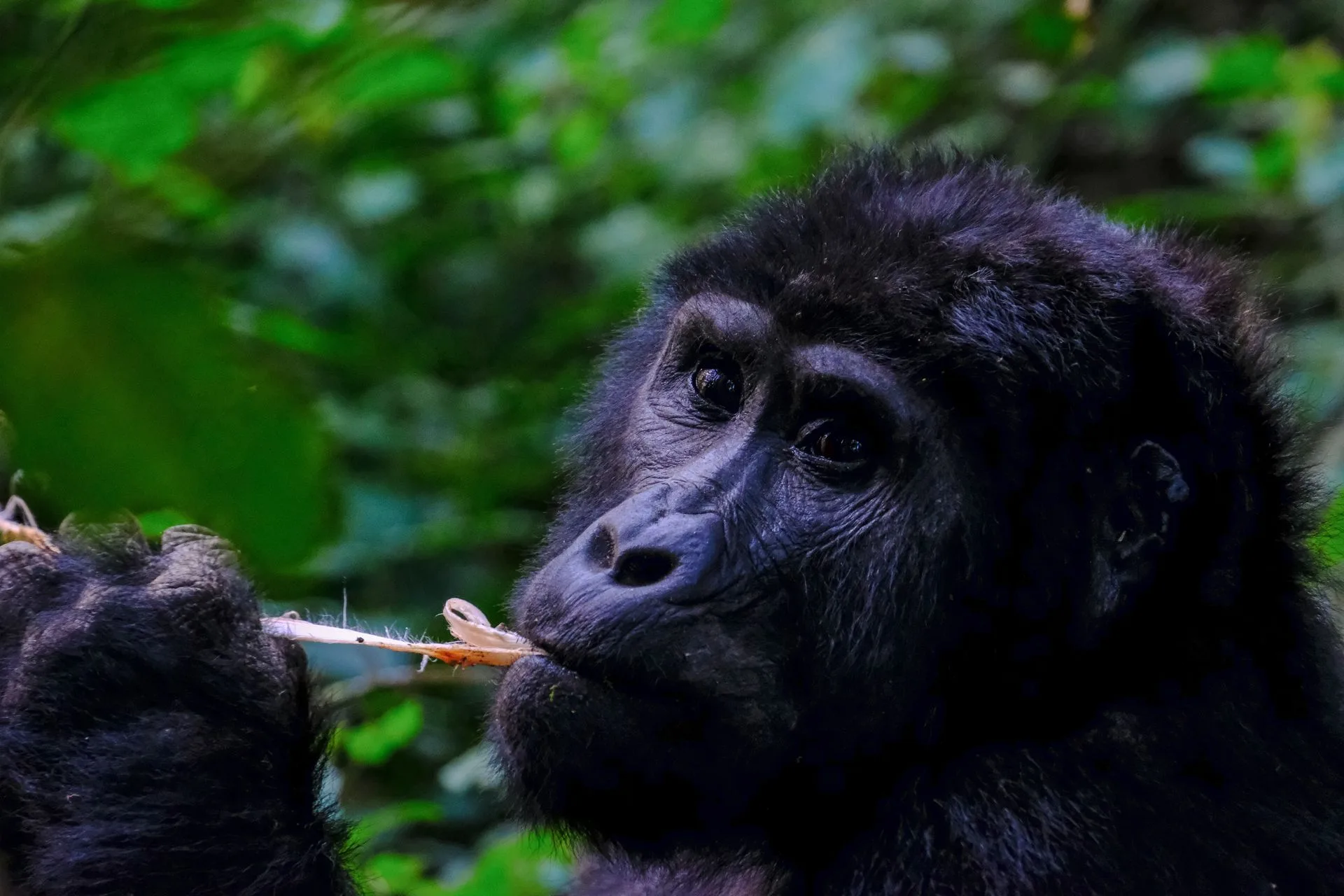
The primary draw is mountain gorilla trekking in Bwindi Impenetrable Forest, where 12 habituated gorilla families can be visited by small groups of eight trekkers each. The experience of sitting within metres of a silverback gorilla in his forest domain — watching the family groom, play, and feed in complete ease — is regularly cited as the most profound wildlife encounter on Earth.
Beyond gorillas, Uganda is Africa's premier primate destination. Kibale Forest hosts 13 primate species including habituated chimpanzees, while Queen Elizabeth National Park's Ishasha sector is famous for its tree-climbing lions — one of only two populations in Africa that regularly ascend fig trees. Murchison Falls National Park offers classic big game safari along the Nile, with the falls themselves — where the entire river is forced through a 7-metre gap — ranking among Africa's most dramatic natural spectacles.
With over 1,000 confirmed bird species in a country smaller than the UK, Uganda is also Africa's top birding destination, attracting ornithologists from around the world seeking rare Albertine Rift endemics and the prehistoric-looking shoebill stork.
Why Visit Uganda
Best Time to Visit Uganda
Uganda's equatorial climate means it can be visited year-round. The dry seasons from June to September and December to February offer the best trekking conditions for gorillas and chimpanzees, with drier forest trails and clearer skies.
The wet seasons (March-May and October-November) bring heavier rainfall that makes forest trails muddy and slippery, but gorilla permits are easier to obtain and some lodges offer reduced rates. Game viewing in Queen Elizabeth and Murchison Falls is best during the dry months when animals gather at water sources.
What a Uganda Safari Costs
Mountain gorilla trekking permits are the biggest expense at $800 per person (Uganda Wildlife Authority). Chimpanzee tracking permits cost $200. These are fixed costs that apply regardless of budget level.
Budget accommodations near Bwindi start from $30-80/night. Mid-range lodges $100-300/night. Luxury lodges $300-1,500/night. A 7-day Uganda safari covering Bwindi, Queen Elizabeth, and Kibale costs $2,500-4,000 mid-range or $5,000-10,000 luxury, excluding gorilla permits.
Uganda offers significantly cheaper gorilla permits than Rwanda ($800 vs $1,500), making it the preferred choice for budget-conscious gorilla trekkers.
Getting to Uganda
Entebbe International Airport (EBB) is the main entry point, located 40km from Kampala. International flights connect through Nairobi, Addis Ababa, and Dubai.
Most nationalities require a visa — e-visas are available online ($50 single entry, $100 East Africa Tourist Visa covering Uganda, Kenya, and Rwanda). Bwindi is 8-10 hours by road from Kampala or 1.5 hours by charter flight to Kihihi Airstrip. Internal charter flights connect all major parks and significantly reduce travel times.
Uganda Safari — Frequently Asked Questions
What is the best time to visit Uganda?
Uganda's equatorial climate means it can be visited year-round. The dry seasons from June to September and December to February offer the best trekking conditions for gorillas and chimpanzees, with drier forest trails and clearer skies. The wet seasons (March-May and October-November) bring heavier rainfall that makes forest trails muddy and slippery, but gorilla permits are easier to obtain and some lodges offer reduced rates. Game viewing in Queen Elizabeth and Murchison Falls is best during the dry months when animals gather at water sources.
How do I get to Uganda?
Entebbe International Airport (EBB) is the main entry point, located 40km from Kampala. International flights connect through Nairobi, Addis Ababa, and Dubai. Most nationalities require a visa — e-visas are available online ($50 single entry, $100 East Africa Tourist Visa covering Uganda, Kenya, and Rwanda). Bwindi is 8-10 hours by road from Kampala or 1.5 hours by charter flight to Kihihi Airstrip. Internal charter flights connect all major parks and significantly reduce travel times.
How much does a Uganda safari cost?
Mountain gorilla trekking permits are the biggest expense at $800 per person (Uganda Wildlife Authority). Chimpanzee tracking permits cost $200. These are fixed costs that apply regardless of budget level. Budget accommodations near Bwindi start from $30-80/night. Mid-range lodges $100-300/night. Luxury lodges $300-1,500/night. A 7-day Uganda safari covering Bwindi, Queen Elizabeth, and Kibale costs $2,500-4,000 mid-range or $5,000-10,000 luxury, excluding gorilla permits. Uganda offers significantly cheaper gorilla permits than Rwanda ($800 vs $1,500), making it the preferred choice for budget-conscious gorilla trekkers.
What are the top things to see in Uganda?
Uganda is renowned for: Mountain gorilla trekking in Bwindi, Chimpanzee tracking in Kibale Forest, Tree-climbing lions in Queen Elizabeth NP, Murchison Falls — the world's most powerful waterfall, White-water rafting on the Nile at Jinja, Over 1,000 bird species — Africa's top birding destination. The exact wildlife and experiences depend on the season and specific areas you visit.
Can I book a Uganda safari through SafariSync?
Absolutely. SafariSync connects you with verified safari operators who run tours in Uganda. Submit an inquiry and our operators will craft a custom itinerary tailored to your dates, budget, and interests.
Why Trust This Guide
This guide is written and maintained by the SafariSync team in Arusha, Tanzania, drawing on our direct relationships with the operators and lodges we list.