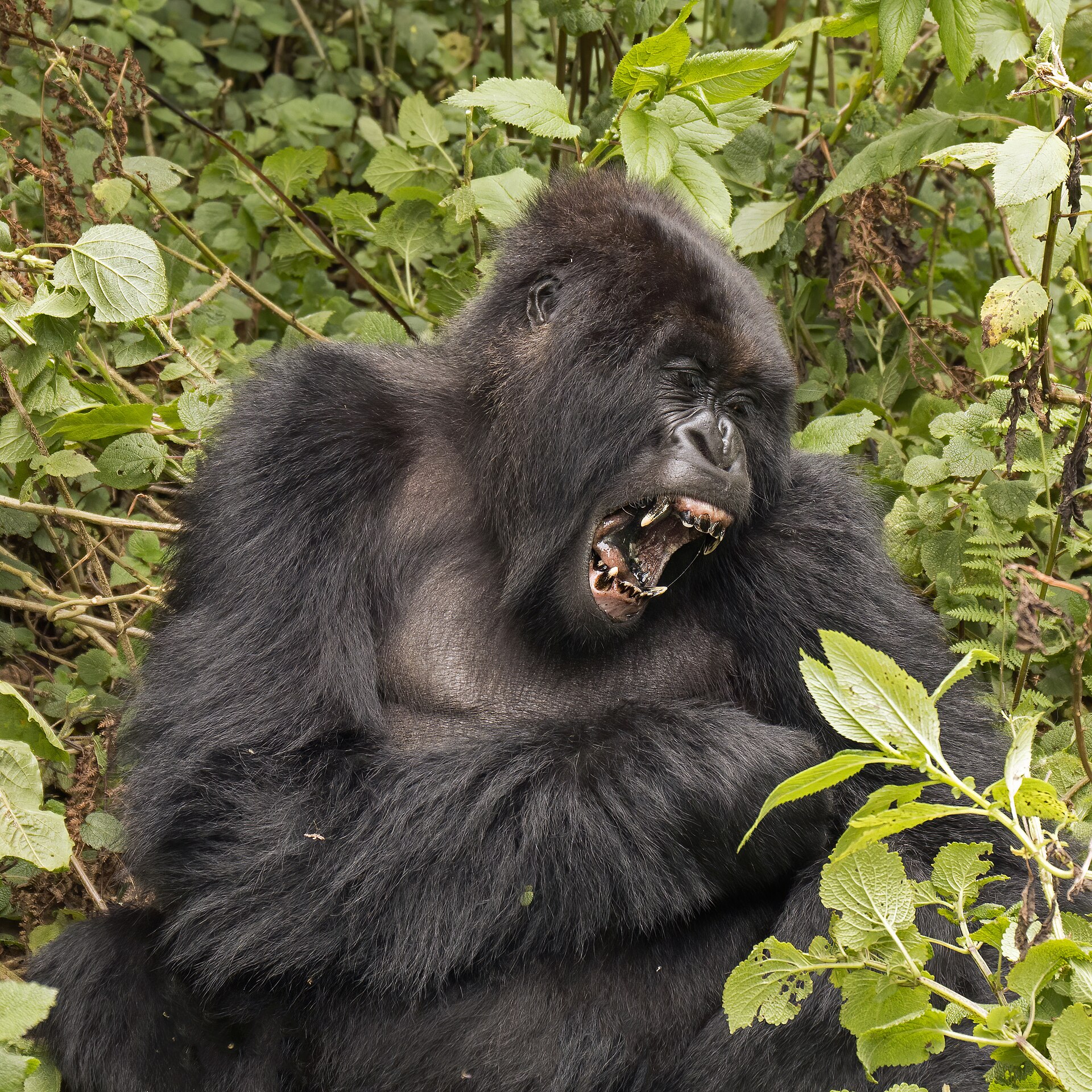
Volcanoes National Park Safari Guide
The original mountain gorilla research site, set among the dramatic Virunga Volcanoes — Rwanda's premier destination for gorilla trekking and golden monkey tracking.
Written by SafariSync Experts
Arusha, Tanzania — on-the-ground knowledge
About Volcanoes National Park
Volcanoes National Park is hallowed ground for wildlife conservation — the place where Dian Fossey conducted her pioneering gorilla research from 1967 until her murder in 1985, and where her legacy lives on through the thriving gorilla population she fought to protect. The park encompasses the Rwandan portion of the Virunga Volcanoes, a chain of eight volcanic peaks straddling the borders of Rwanda, Uganda, and the DRC.
Gorilla trekking here unfolds against a backdrop of extraordinary natural beauty. Trekking parties hike through terraced farmland before entering the park's bamboo zone, ascending through hagenia-hypericum woodland, and sometimes reaching the subalpine zone near the volcanic summits. The 12 habituated gorilla families range from easily accessible groups found on lower slopes to more challenging treks that reward with quieter, more intimate encounters.
The endemic golden monkey, found only in the Virunga and Gishwati forests, provides a delightful second primate tracking experience. These charismatic, playful primates inhabit the bamboo forest at lower altitudes and are typically easier to reach than the gorillas. A hike to Dian Fossey's grave and the remains of her Karisoke Research Centre adds a moving historical dimension to any visit.
Why Visit Volcanoes National Park
Best Time to Visit Volcanoes National Park
June to September and December to February for driest trekking. Permits sell out months ahead — book as early as possible. Morning cloud often clears to reveal stunning volcanic panoramas.
What a Volcanoes National Park Safari Costs
Gorilla permits $1,500/person (book through RDB 3-12 months ahead). Golden monkey tracking $100/person. Mount Bisoke hike $75/person. Luxury lodges (Bisate, One&Only Gorilla's Nest, Singita Kwitonda) $1,000-5,000/night. Mid-range lodges $200-600/night. Budget in Musanze $30-100/night.
Getting to Volcanoes National Park
2.5 hours from Kigali by road to Musanze (Ruhengeri) and the park headquarters at Kinigi. All gorilla treks depart from Kinigi at 7am. Transfer from Kigali can be arranged through lodges or tour operators.
Volcanoes National Park Safari — Frequently Asked Questions
How much does gorilla trekking in Rwanda cost?
The Rwanda gorilla trekking permit costs $1,500 per person, booked through the Rwanda Development Board (RDB). This is in addition to accommodation, transfers, and guide fees. A 3-day Rwanda gorilla trekking trip all-inclusive typically costs $3,000–$7,000 per person depending on lodge choice.
Rwanda or Uganda for gorilla trekking?
Rwanda advantages: closer to Kigali airport (2.5 hours), shorter average treks, more luxury lodge options, more infrastructure. Uganda advantages: lower permit cost ($800 vs $1,500), more habituated gorilla families (12+ in Bwindi vs 12 in Volcanoes), combined with Ugandan wildlife parks. First-timers often choose Rwanda for convenience; budget travelers choose Uganda.
How difficult is gorilla trekking at Volcanoes NP?
Gorilla trekking at Volcanoes is generally easier than Bwindi (Uganda) because the Virunga volcanic slopes have less dense undergrowth. Average trek time is 2–4 hours. All fitness levels from light moderate upward can participate. Porters are available to assist and carry gear. Minimum age is 15 years.
What is the golden monkey tracking experience?
Volcanoes NP is the only place in the world to see the endangered golden monkey (Cercopithecus kandti). The golden monkey permit costs $100/person and the trek typically takes 1–2 hours. It is a spectacular experience with the vivid orange monkeys leaping through the bamboo forest — an excellent addition to any gorilla trekking trip.
What is the best time to visit Volcanoes National Park?
Gorilla trekking is offered year-round. Best conditions are during the dry seasons: June–August and December–February. The volcanic slopes are less muddy, trails are drier, and the panoramic views from higher elevations are clearer. Wet season (March–May, September–November) permits are easier to book and lodge prices drop 10–20%.
Why Trust This Guide
This guide is written and maintained by the SafariSync team in Arusha, Tanzania, drawing on our direct relationships with the operators and lodges we list.