Amboseli National Park Safari Guide
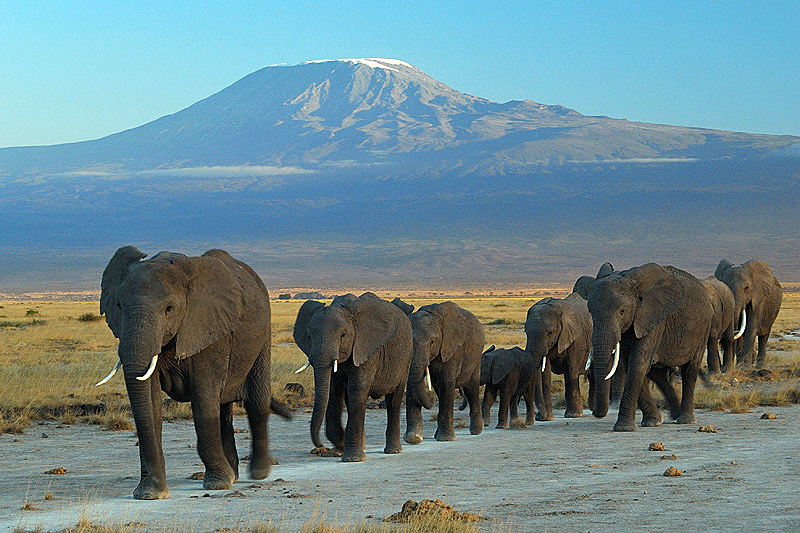
The land of giants — massive tusker elephants set against the stunning backdrop of Mount Kilimanjaro, creating Africa's most iconic photographic safari destination.
Written by SafariSync Experts
Arusha, Tanzania — on-the-ground knowledge
About Amboseli National Park
Amboseli is one of Kenya's most photogenic national parks — a relatively compact reserve where massive elephants with some of the largest tusks in Africa roam against the stunning backdrop of Mount Kilimanjaro, Africa's highest peak. The mountain's snow-capped summit rising above the acacia-dotted plains creates what is arguably the most iconic image in African safari photography.
The park's swamps, fed by underground water from Kilimanjaro's melting glaciers, create permanent green oases that attract wildlife year-round. Amboseli's elephants are among the most studied in Africa — some individuals have been monitored for over 40 years by the Amboseli Trust for Elephants, providing invaluable insights into elephant behaviour and social structures.
Beyond the elephants, Amboseli supports good populations of lions, cheetahs, hippos, and a rich diversity of waterbirds. Observation Hill provides panoramic views across the entire park, and the surrounding Maasai group ranches offer cultural experiences and community-based conservation initiatives.
Why Visit Amboseli National Park
Best Time to Visit Amboseli National Park
January to February for clear Kilimanjaro views and dry conditions. June to October also good. Early morning offers the best mountain views before clouds build. The park is a year-round destination.
What a Amboseli National Park Safari Costs
Park fees $60/adult/day. Budget accommodation from $80/night. Mid-range lodges $200-500/night. Luxury $400-1,000/night. Often a 2-night stop on a Kenya safari circuit.
Getting to Amboseli National Park
Bush flights from Nairobi Wilson Airport (45min). Road from Nairobi (4-5hrs) via Namanga. The park is near the Tanzania border, combining well with Kilimanjaro or cross-border itineraries.
Amboseli National Park Safari — Frequently Asked Questions
What is Amboseli famous for?
Amboseli is famous for: large free-roaming elephant herds, views of Mount Kilimanjaro, and open landscape photography. The Amboseli elephants are studied by the longest-running elephant research project in the world (since 1972 — Cynthia Moss's research). Many elephants are individually named and their life stories documented.
Can you see Kilimanjaro from Amboseli?
Yes — on clear days (usually early morning and late afternoon), Kilimanjaro dominates the southern horizon. The mountain is often obscured by cloud mid-day. December–January (post-rains) and June–October (dry season, clear skies) offer the best Kilimanjaro views. The classic photography shot — an elephant with Kilimanjaro behind — requires patience but is achievable.
How long should I spend in Amboseli?
Two to three nights is ideal. Amboseli is a small park (392 km²) and most core areas can be covered in 4–5 game drives. It is best combined with the Masai Mara (4–6 hours by road or 30 minutes by air) for a complete Kenya safari. The classic itinerary is 2 nights Amboseli + 3 nights Masai Mara.
Is Amboseli dusty?
Yes — Amboseli sits on an ancient lake bed and is notoriously dusty, especially in dry season. Open 4x4 game drive vehicles can get very dusty. Bring a buff/neck gaiter and sunglasses. The dust actually creates dramatic photographic conditions — particularly golden-hour shots of elephants in dust clouds against Kilimanjaro.
How do I get to Amboseli from Nairobi?
Amboseli is 220 km south of Nairobi — approximately 4 hours by road via Emali or Namanga. Charter flights from Wilson Airport (Nairobi) reach Amboseli in 45 minutes. The road from Namanga (Kenya-Tanzania border) is popular for those combining Amboseli with a Tanzania circuit.
Why Trust This Guide
This guide is written and maintained by the SafariSync team in Arusha, Tanzania, drawing on our direct relationships with the operators and lodges we list.