Tanzania Safari Guide
Tanzania holds the largest concentration of protected land in East Africa, and most first safaris here follow the northern circuit: Tarangire for dry-season elephant, the Ngorongoro Crater for a dense resident population including black rhino, and the Serengeti for the wildebeest migration and resident big cats. The circuit works because the parks sit within a day's drive of Arusha and complement rather than repeat each other. Beyond it, the southern parks of Nyerere and Ruaha offer far lower vehicle density for visitors willing to fly, the Mahale and Gombe forests on Lake Tanganyika are among the few places to track wild chimpanzees, and Zanzibar and the Indian Ocean coast make the standard end to a trip. Park fees are charged per person per day and are usually bundled into lodge or operator pricing, so the headline nightly rate is rarely the whole cost — worth confirming before you compare quotes.
Written by SafariSync Experts
Arusha, Tanzania — on-the-ground knowledge
About Tanzania
Tanzania is the beating heart of African safari tourism — a country of staggering natural diversity that encompasses the iconic Serengeti plains, the ancient Ngorongoro Crater, snow-capped Kilimanjaro, remote chimpanzee forests, and the tropical spice island of Zanzibar. No other African destination offers such breadth of safari experiences within a single country.
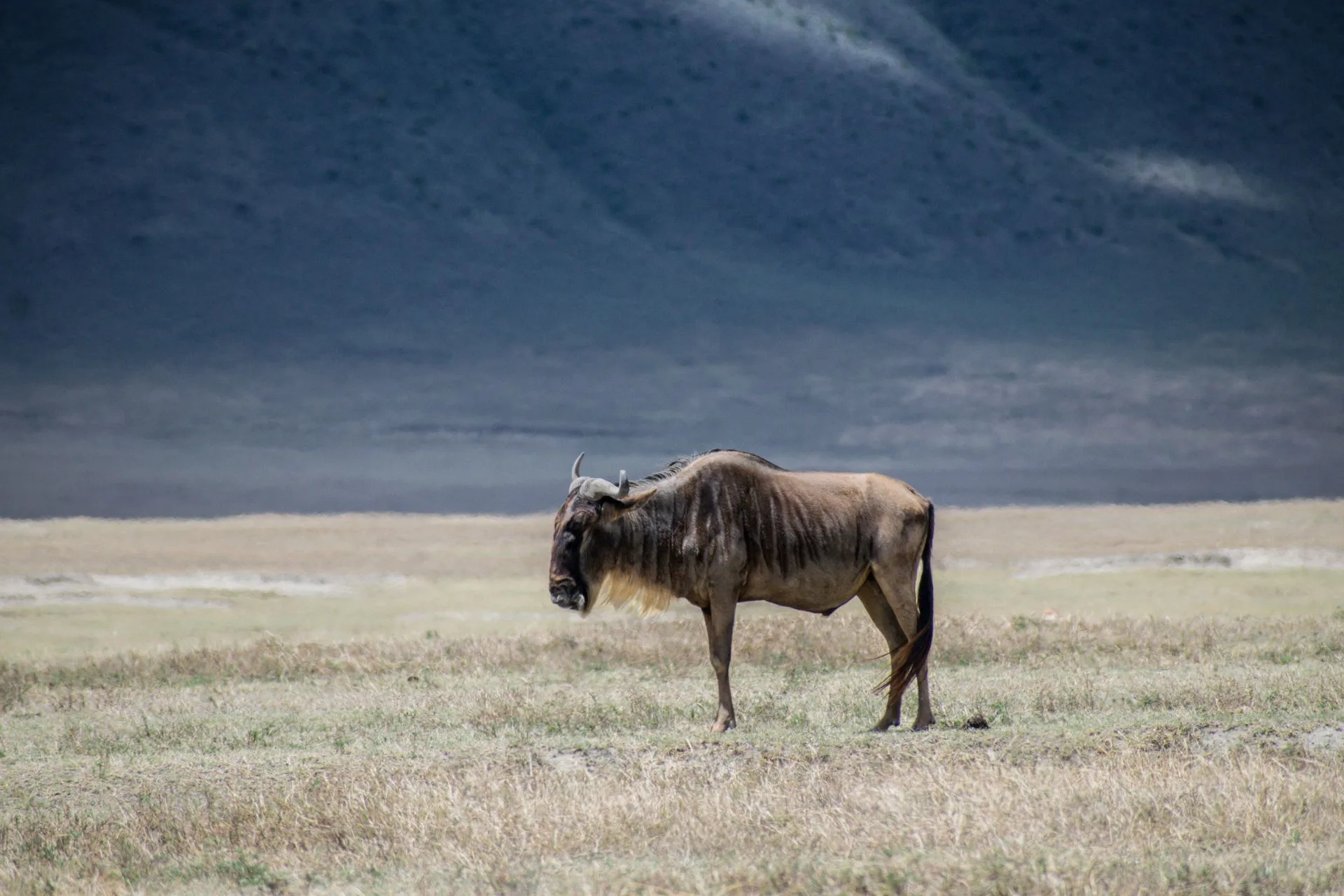
The Great Wildebeest Migration is Tanzania's headline act — over two million wildebeest, zebra, and gazelle moving in an endless cycle between the Serengeti and Kenya's Masai Mara. But Tanzania's appeal extends far beyond this single spectacle. The Ngorongoro Crater supports one of the densest concentrations of wildlife on Earth. The southern parks of Nyerere and Ruaha offer vast, uncrowded wilderness. The western parks of Mahale and Gombe provide intimate chimpanzee encounters in primeval forests.
Tanzania pioneered the concept of luxury tented camping, and the country remains the gold standard for classic safari experiences. From vast mobile camps that follow the migration to permanent lodges perched on crater rims, the accommodation options are extraordinary. Combined with warm Tanzanian hospitality, incredible cultural depth from over 120 ethnic groups, and some of the most knowledgeable guides in Africa, Tanzania consistently delivers unforgettable safari experiences.
Whether you're watching a million wildebeest cross the Mara River, peering into the Ngorongoro Crater at dawn, summiting Kilimanjaro, or relaxing on a Zanzibar beach, Tanzania offers the complete African experience.
Why Visit Tanzania
Best Time to Visit Tanzania
The dry season from June to October is peak safari time with excellent wildlife viewing as animals gather around water sources. The Great Migration reaches the northern Serengeti from July to October for dramatic river crossings.
The short rains (November-December) bring green landscapes and newborn animals. January to March is calving season in the southern Serengeti — over 8,000 wildebeest born daily. The long rains from March to May are the low season with reduced prices but some camps close.
Zanzibar is best June to October and December to February. Kilimanjaro is climbable year-round but January-March and June-October offer the driest conditions.
What a Tanzania Safari Costs
Tanzania spans all budget levels. Budget camping safaris from $150-250/day. Mid-range lodge safaris $300-600/day. Luxury tented camps and fly-in safaris $800-2,000+/day.
National park fees are significant: Serengeti $70/adult/day, Ngorongoro Crater $70 entry + $295 vehicle fee. Budget 5-7 days for a classic northern circuit safari ($1,500-4,000 mid-range). Kilimanjaro climbs cost $2,000-6,000+ depending on route and operator.
Zanzibar beach extensions add $100-500/night depending on hotel choice. Internal flights (e.g. Arusha to Serengeti) cost $250-400 one-way but save significant driving time.
Getting to Tanzania
Kilimanjaro International Airport (JRO) near Arusha is the main safari gateway, with direct flights from Amsterdam (KLM), Doha (Qatar), Istanbul (Turkish), and Nairobi. Julius Nyerere Airport (DAR) in Dar es Salaam serves the southern circuit and Zanzibar connections.
Most nationalities require a visa — available on arrival ($50) or via e-visa. Safari operators typically arrange airport transfers. The northern circuit operates from Arusha; the southern circuit from Dar es Salaam.
Internal bush flights connect the Serengeti, Nyerere, Ruaha, and Mahale — essential for remote western parks. Zanzibar is a 20-minute flight or 2-hour ferry from Dar es Salaam.
Tanzania Safari — Frequently Asked Questions
What is the best time to visit Tanzania?
The dry season from June to October is peak safari time with excellent wildlife viewing as animals gather around water sources. The Great Migration reaches the northern Serengeti from July to October for dramatic river crossings. The short rains (November-December) bring green landscapes and newborn animals. January to March is calving season in the southern Serengeti — over 8,000 wildebeest born daily. The long rains from March to May are the low season with reduced prices but some camps close. Zanzibar is best June to October and December to February. Kilimanjaro is climbable year-round but January-March and June-October offer the driest conditions.
How do I get to Tanzania?
Kilimanjaro International Airport (JRO) near Arusha is the main safari gateway, with direct flights from Amsterdam (KLM), Doha (Qatar), Istanbul (Turkish), and Nairobi. Julius Nyerere Airport (DAR) in Dar es Salaam serves the southern circuit and Zanzibar connections. Most nationalities require a visa — available on arrival ($50) or via e-visa. Safari operators typically arrange airport transfers. The northern circuit operates from Arusha; the southern circuit from Dar es Salaam. Internal bush flights connect the Serengeti, Nyerere, Ruaha, and Mahale — essential for remote western parks. Zanzibar is a 20-minute flight or 2-hour ferry from Dar es Salaam.
How much does a Tanzania safari cost?
Tanzania spans all budget levels. Budget camping safaris from $150-250/day. Mid-range lodge safaris $300-600/day. Luxury tented camps and fly-in safaris $800-2,000+/day. National park fees are significant: Serengeti $70/adult/day, Ngorongoro Crater $70 entry + $295 vehicle fee. Budget 5-7 days for a classic northern circuit safari ($1,500-4,000 mid-range). Kilimanjaro climbs cost $2,000-6,000+ depending on route and operator. Zanzibar beach extensions add $100-500/night depending on hotel choice. Internal flights (e.g. Arusha to Serengeti) cost $250-400 one-way but save significant driving time.
What are the top things to see in Tanzania?
Tanzania is renowned for: The Great Wildebeest Migration across the Serengeti, Ngorongoro Crater — the world's largest intact caldera, Mount Kilimanjaro — Africa's highest peak, Zanzibar — spice island beaches and Stone Town, Chimpanzee trekking in Mahale and Gombe, Remote southern parks — Nyerere and Ruaha, Over 1,000 bird species across diverse habitats, Authentic Maasai cultural experiences. The exact wildlife and experiences depend on the season and specific areas you visit.
Can I book a Tanzania safari through SafariSync?
Absolutely. SafariSync connects you with verified safari operators who run tours in Tanzania. Submit an inquiry and our operators will craft a custom itinerary tailored to your dates, budget, and interests.
Why Trust This Guide
This guide is written and maintained by the SafariSync team in Arusha, Tanzania, drawing on our direct relationships with the operators and lodges we list.