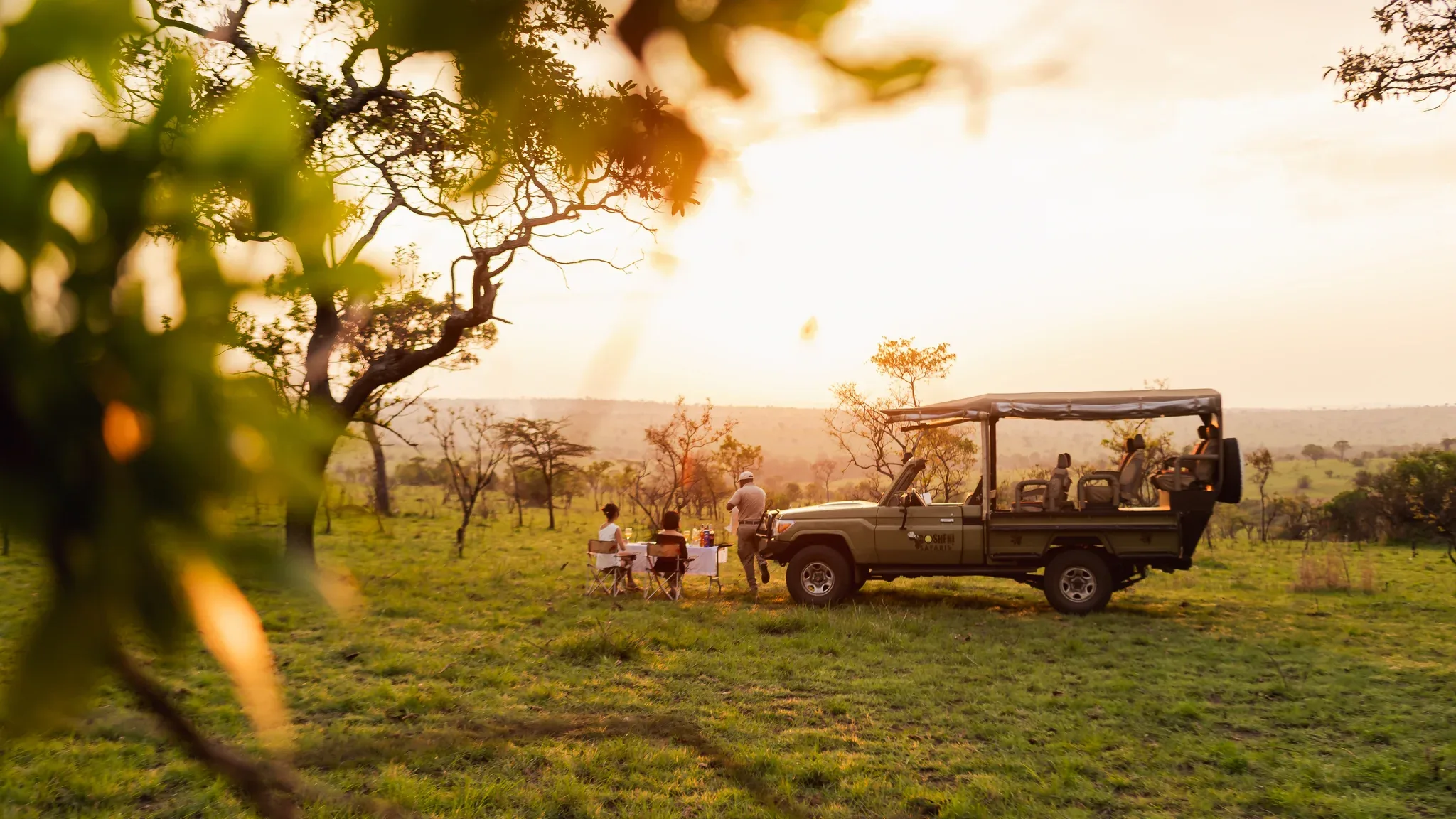
You have booked your first safari. Congratulations. You are about to experience something that no documentary, no photograph, and no amount of reading can truly prepare you for. But before you step onto that bush plane or climb into that Land Cruiser, there are things you need to know -- things that most travel guides gloss over or skip entirely.
After years of guiding travelers through East and Southern Africa, we have compiled the checklist that actually matters. Not the glossy brochure version, but the practical, hard-won wisdom that separates a good safari from a great one.
Health and Documents: The Non-Negotiables
Start with the boring stuff, because getting it wrong can derail everything. Yellow fever vaccination is required for entry into Tanzania, Kenya, and several other East African countries if you are arriving from or transiting through an endemic country. Carry your yellow card -- some immigration officers will ask for it before they even look at your passport.
Malaria prophylaxis is not optional. The Serengeti, Selous, and most lowland safari areas are malaria zones. Consult a travel doctor at least six weeks before departure. Malarone, doxycycline, and mefloquine are the common options, each with different side-effect profiles. Your doctor will help you choose.
Travel insurance with medical evacuation is the single most important thing on this list. A standard travel policy is not enough. You need one that specifically covers emergency air evacuation from remote areas. Companies like AMREF Flying Doctors and Global Rescue specialize in this. A helicopter evacuation from the northern Serengeti to Nairobi can cost $15,000 or more without coverage.
Visas for Tanzania and Kenya are available on arrival or via e-visa. Apply online in advance to skip the queue. Bring a printed copy of your e-visa confirmation -- connectivity at border posts is unreliable.
What to Pack (and What to Leave Behind)
Pack in a soft-sided duffel bag, not a hard suitcase. Bush planes have strict weight limits -- typically 15-20kg including your carry-on -- and rigid cases do not fit in the cargo holds of Cessna Caravans. This is not a suggestion; your bag may be refused at the airstrip.
Neutral-colored clothing in khaki, olive, tan, and brown. Not because animals will see bright colors (most large mammals are dichromatic), but because you blend into the landscape and do not distract other guests. Avoid white (gets filthy), black (attracts tsetse flies), and camouflage (illegal to wear in several African countries, including Zimbabwe and Zambia).
- Layers are essential. Mornings on the Ngorongoro Crater rim at 2,200 meters are genuinely cold -- 5 to 8 degrees Celsius. By midday on the crater floor, it is 28 degrees. A fleece or down jacket that packs small is worth its weight.
- A good hat with a brim -- the equatorial sun is no joke, even in an open vehicle.
- Closed-toe walking shoes for bush walks. Sandals are fine around camp but not in the bush.
- A headlamp -- camps cut generator power at night, and the path to your tent is dark.
Binoculars vs Camera: The Great Debate
Here is what nobody tells you: binoculars will improve your safari more than an expensive camera. A decent pair of 8x42 or 10x42 binoculars (Nikon Monarch, Vortex Diamondback, or similar in the $150-300 range) transforms every game drive. You will see the expression on a leopard's face at 200 meters. You will watch a cheetah's muscles ripple before a sprint. You will identify that speck on a distant ridge as a rhino.
If you are bringing a dedicated camera, a 100-400mm zoom lens covers 90% of safari situations. But do not spend the entire drive looking through a viewfinder. Your eyes and binoculars will give you a richer experience than any LCD screen.
Money, Tips, and Practical Matters
Bring US dollars in small denominations ($1, $5, $10, $20). Tips are customary and appreciated. The general guideline for Tanzania:
- Safari guide: $15-25 per person per day
- Camp/lodge staff (pooled tip): $10-15 per person per day
- Transfer drivers: $5-10 per transfer
- Porters at Kilimanjaro or trekking: $10-15 per porter per day
US dollar bills must be printed after 2013 -- older series are widely refused in East Africa due to counterfeiting concerns. Bring crisp, clean notes.
Charging electronics in remote bush camps can be a challenge. Many tented camps run on solar and have limited power windows. Bring a multi-port USB charger and a portable power bank (20,000mAh minimum). Some camps only provide charging stations in the main area, not in individual tents.
Managing Expectations: The Honest Truth
A safari is not a zoo visit. Animals are wild, unpredictable, and do not perform on schedule. You may spend three days searching for a leopard and never find one. You may round a corner and find a coalition of cheetahs hunting a wildebeest within your first hour.
The best safari travelers are the ones who come with curiosity rather than a checklist. Every drive reveals something -- a dung beetle rolling its prize, a lilac-breasted roller catching the light, the sound of a hyena whooping at dusk. These are the moments that stay with you.
Game drives typically start at 6:00 or 6:30 AM. The first two hours after dawn and the last two before sunset are when predators are most active. The midday hours are quiet -- lions sleep, elephants browse in shade. This is by design, not laziness. Use the midday break to rest, because 4:30 AM wake-up calls accumulate.
The Importance of a Good Guide
This is perhaps the most underrated factor in any safari. A skilled guide does not just find animals -- they read the bush, interpret behavior, predict movement, and tell you the story behind what you are seeing. The difference between a mediocre guide and a great one is the difference between watching television and being inside the documentary.
When booking, ask your operator about their guides' qualifications and experience. In Tanzania, look for TALA (Tanzania Association of Tour Operators) licensed guides. In Kenya, KPSGA (Kenya Professional Safari Guides Association) Silver or Gold level guides are the standard. It is worth paying more for a senior guide, especially on your first safari.
Your first safari will change how you see the natural world. Go prepared, stay flexible, and let the bush surprise you. It always does.