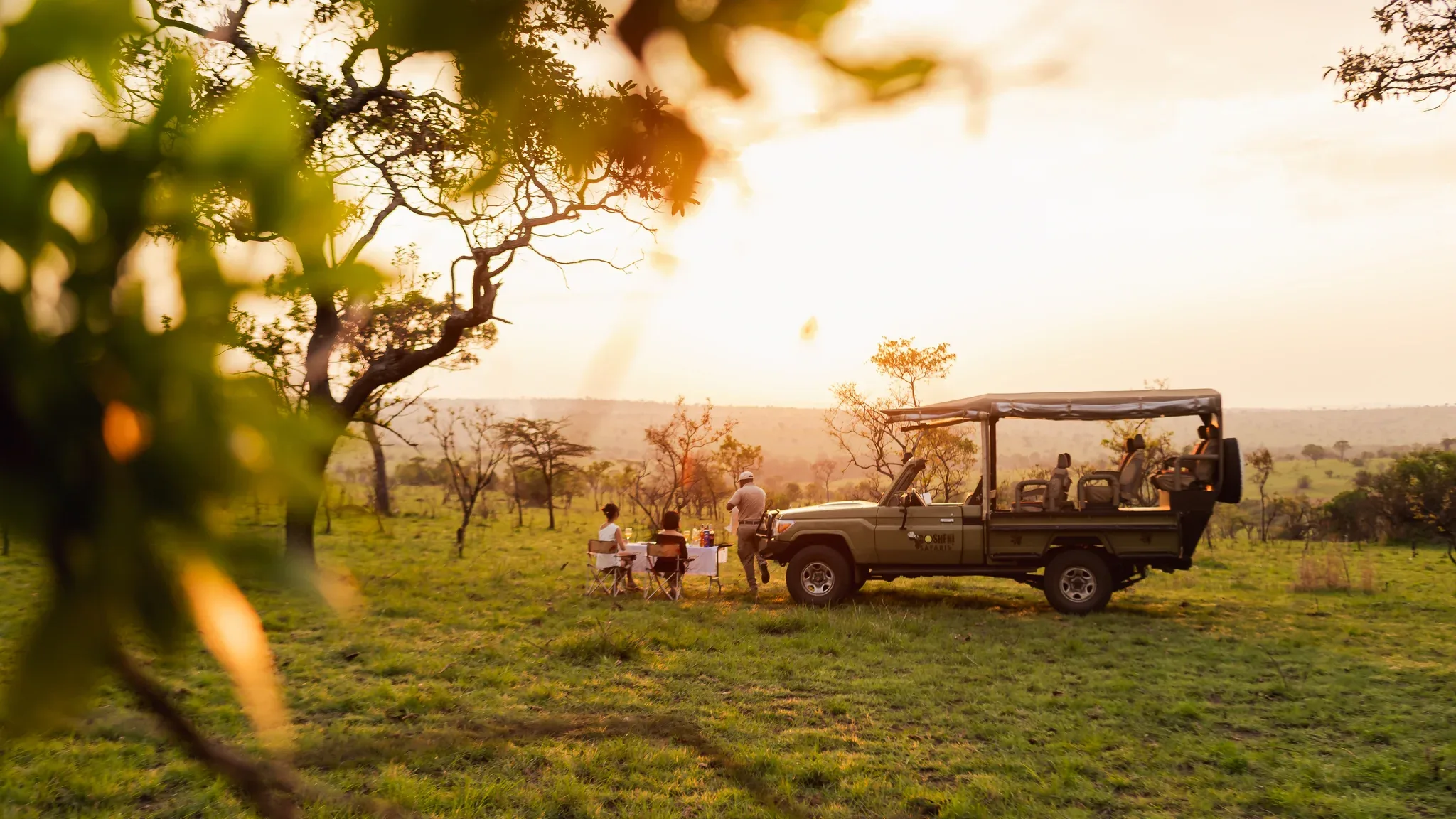
One of the first decisions you will face when planning a safari is whether to join a group departure or book a private trip. It is not simply a question of budget -- though cost is certainly a factor. The right choice depends on your travel style, priorities, and what you hope to get out of the experience.
Having arranged both group and private safaris across Tanzania and Kenya for years, we can tell you that neither option is inherently better. But one is almost certainly better for you. Here is how to decide.
The Cost Reality
Let us start with the numbers, because they matter.
A group safari in Tanzania typically costs $250 to $450 per person per day, depending on the accommodation standard and itinerary. This covers your guide, vehicle (shared with 4-6 others), park fees, accommodation, and most meals. Budget camping safaris can go lower -- $180-220 per day -- but comfort drops significantly.
A private safari ranges from $500 to $1,500+ per person per day for two travelers. The per-person cost drops sharply with more people: a family of four on a private safari often pays only 20-30% more per person than a group trip, because the vehicle and guide costs are shared among the family.
Here is what most price comparisons miss: the value equation shifts at three or more travelers. A couple pays a premium for privacy. A family of four or a group of friends gets privacy at near-group-safari prices. Always get a private quote before defaulting to a group departure.
Flexibility and Control
This is where private safaris genuinely shine. On a private safari:
- You decide how long to stay with a sighting. If a leopard is hunting, you do not leave because three other guests are bored.
- You choose your departure time. Want to leave at 5:30 AM to catch the dawn? Done.
- You can modify the itinerary. If the migration has shifted south, your guide can adjust on the fly.
- Bathroom breaks happen when you need them, not on a schedule.
- You control the noise level in the vehicle.
On a group safari, the itinerary is fixed. The guide manages the needs and interests of everyone on board. If one person is a passionate birder and another wants only big cats, the guide must compromise. This is not a flaw -- it is the reality of shared travel.
The Social Factor
Here is something that surprises many travelers: group safaris can be wonderful precisely because of the other people. Sharing the moment when a pride of lions walks past your vehicle, swapping stories over sundowners, making friends from different countries -- these are genuine highlights that private travelers miss.
Small group safaris (maximum 6 guests in a single vehicle) strike the best balance. Avoid large-group departures with 8-9 people crammed into an extended Land Cruiser -- window seats matter enormously for photography and viewing, and middle seats are frustrating.
We have seen lifelong friendships forged on group safaris. We have also seen trips strained by incompatible travel companions. The group is a gamble -- a small one, but a gamble nonetheless.
Photography Considerations
If photography is a primary goal, private is strongly recommended. The reasons are practical:
- You can position the vehicle for optimal light without negotiating with other guests.
- You can wait for the perfect moment without pressure to move on.
- There is no jostling for window position or lens angles.
- Your guide can prioritize photographic opportunities when you communicate your interests.
- You can request specific backgrounds, angles, and compositions by directing the vehicle.
Serious wildlife photographers almost universally choose private safaris or dedicated photographic safaris with specialized guides who understand exposure, composition, and animal behavior from a photographer's perspective.
Family Safaris
Traveling with children under 12? Private is almost always the right call. Most group safaris have minimum age requirements (typically 7 or 12 years old). Even when children are permitted, an 8-year-old's attention span and a retiree's patience do not always align.
A private safari lets you:
- Keep drives shorter for younger children
- Stop for activities that engage kids (tracking footprints, identifying birds)
- Return to camp early if someone is tired or unwell
- Choose family-friendly lodges with pools and kid-specific programs
Many lodges in the Serengeti and Masai Mara offer excellent junior ranger programs, but these work best when paired with a flexible private itinerary.
When Group Is Actually Better
Group safaris are not just a budget compromise. They are genuinely better in certain situations:
- Solo travelers -- you avoid the single supplement (which can add 30-50% to the cost of a private trip) and you have built-in company.
- First-time safari-goers who are unsure what they want -- a group trip is a lower-commitment way to experience the bush before investing in a tailored private itinerary.
- Fixed dates -- if you can only travel on specific dates, group departures are often available when private arrangements require more lead time.
- Social travelers who genuinely enjoy meeting new people and sharing experiences.
The Hybrid Approach
Many experienced safari travelers use a hybrid approach: a group departure for the main circuit (Serengeti, Ngorongoro, Tarangire) combined with a private extension to a more remote area (Ruaha, Mahale, or the southern Serengeti). This keeps costs manageable while still offering the exclusivity and flexibility that remote areas reward.
Whatever you choose, the safari itself is the point. A wildebeest crossing the Mara River is breathtaking whether you are sharing the moment with two people or eight. Choose the format that lets you be most present for it.