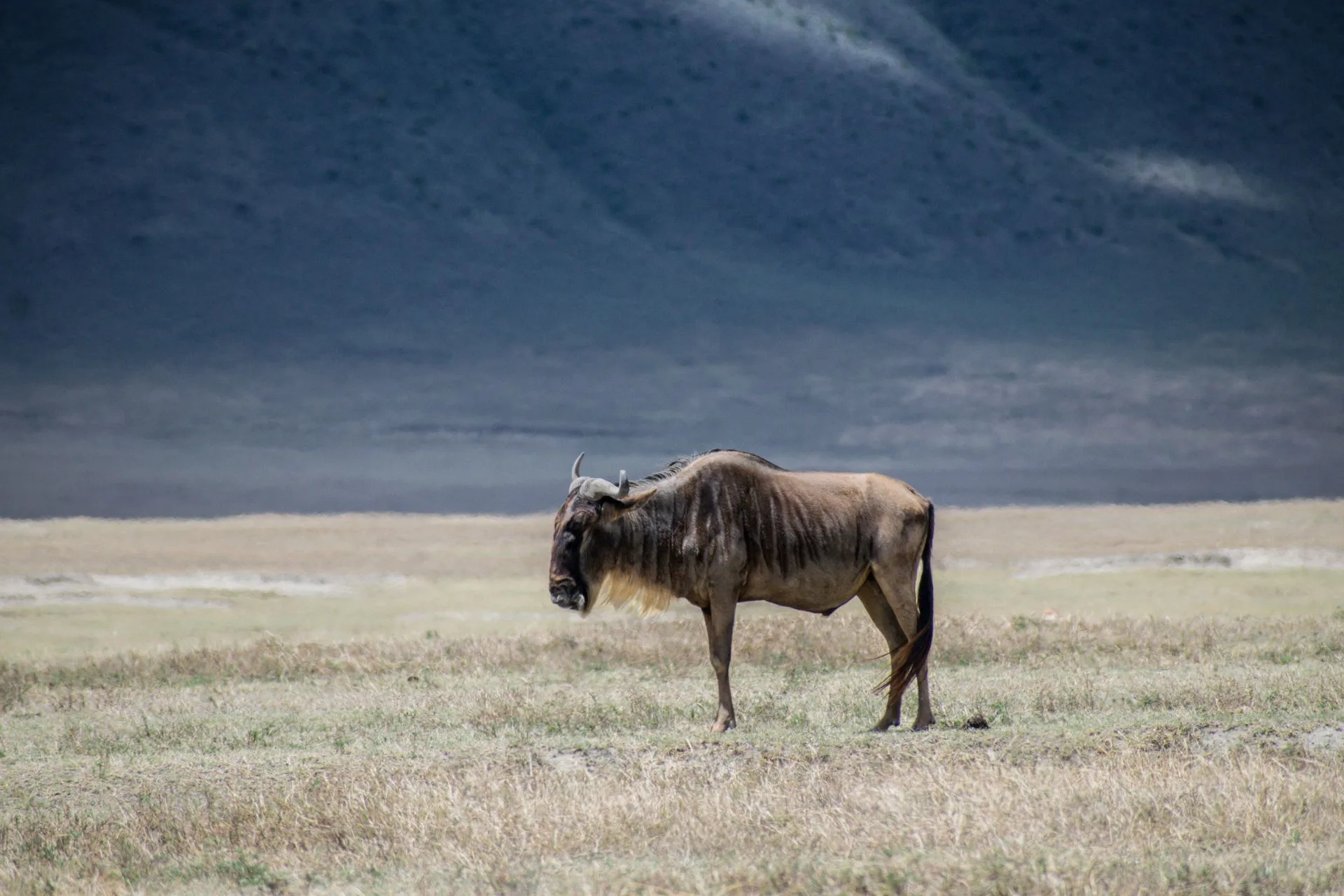
Every year, roughly two million wildebeest, 500,000 zebra, and 300,000 Thomson's gazelle undertake a continuous clockwise circuit through the Serengeti-Mara ecosystem. It is the largest terrestrial animal migration on Earth, and it has been happening for over a million years. No fence, no border, and no season stops it.
Calling it a "migration" is slightly misleading. The herds are not moving from point A to point B. They are in constant motion, following the rains and the fresh grass that follows. There is no beginning and no end -- only an ancient, circular rhythm dictated by water and grazing.
The Annual Cycle: Month by Month
January to March: Calving Season in the Southern Serengeti
The herds congregate on the short-grass plains around Ndutu and the southern Serengeti, near the Ngorongoro Conservation Area. The nutrient-rich volcanic soils here produce grass with exceptionally high calcium and phosphorus content -- exactly what pregnant wildebeest need.
Approximately 8,000 calves are born every day during the peak in February. Within minutes of birth, a wildebeest calf is on its feet and running. It has no choice. The predator concentration during calving season is staggering -- lions, cheetahs, hyenas, and jackals all converge on the plains. For photographers and wildlife enthusiasts, this is arguably the most dramatic period of the entire cycle.
Where to stay: Ndutu Safari Lodge, mobile camps on the Ndutu plains, or the southern Serengeti camps near Lake Masek.
April to May: The Long Rains and the Move West
As the long rains arrive, the southern plains flood and the grass grows tall. The herds begin moving northwest through the central Serengeti, crossing the Seronera Valley. This is the quietest period for tourism (and often the most affordable), but the landscape is spectacularly green, the birdlife is extraordinary, and the herds are on the move in massive columns that stretch to the horizon.
June to July: The Western Corridor and the Grumeti River
The migration pushes into the Western Corridor, where the herds face their first major water crossing at the Grumeti River. The Grumeti's resident Nile crocodiles -- some exceeding five meters in length -- have been waiting. These crossings are smaller in scale than the Mara River crossings but no less intense.
The Western Corridor is often overlooked by travelers fixated on the Mara River crossings, which is exactly why it is worth visiting. Fewer vehicles, genuine wilderness, and dramatic river crossings.
August to October: The Mara River Crossings
This is what most people picture when they think of the Great Migration. The herds push north into the northern Serengeti (Kogatende area) and across into Kenya's Masai Mara, crossing the Mara River at several well-known points.
The crossings are chaotic, violent, and deeply moving. Thousands of wildebeest plunge down steep riverbanks into crocodile-infested water, scramble across, and haul themselves up the far side -- or do not. The river claims animals every crossing, and the aftermath feeds vultures, fish eagles, and crocodiles for days.
A Mara River crossing is not entertainment. It is nature operating at full intensity -- survival and death compressed into twenty minutes of noise, dust, and churning water. It is not comfortable to watch. It is unforgettable.
Important: crossings are unpredictable. The herds may gather at the river's edge for hours -- or days -- before crossing. They may turn around and walk away. A crossing might happen while you are at lunch. Patience and multiple days in the area are essential.
Where to stay: Kogatende camps (Serengeti side) or Masai Mara conservancies (Kenya side). Book well in advance -- August and September camps sell out 6-12 months ahead.
November to December: The Return South
As the short rains begin in November, the herds turn south again, moving through the eastern Serengeti and the Loliondo area back toward the Ndutu plains. The cycle restarts. The landscape transforms from dry gold to vivid green within days of the first rains, and the herds follow.
Balloon Safaris Over the Migration
A hot-air balloon safari over the Serengeti during the migration is one of the most extraordinary experiences available in African travel. Floating silently over columns of wildebeest at dawn, with the Serengeti stretching flat in every direction, is perspective-shifting in a literal sense. Expect to pay $500-600 per person. It is worth every dollar.
Practical Tips for Migration Safaris
- Book 6-12 months ahead for peak migration season (July-October). Premium camps sell out fast.
- Stay at least 3 nights in the migration area. One night is a gamble; three gives you a real chance of witnessing a crossing.
- Mobile camps follow the migration and offer the closest access to the herds. They move several times per year to stay in position.
- Bring a dust cover for your camera. The northern Serengeti in dry season generates serious dust.
- Manage expectations around river crossings -- they are weather-dependent and animal-dependent, not scheduled events.
The Great Migration is not a single event. It is a perpetual process, older than human civilization, playing out across 30,000 square kilometers of East African savanna. Whenever you visit, you are stepping into the middle of a story that has no beginning and no end. That is what makes it extraordinary.