Namibia Safari Guide
A land of dramatic contrasts — towering red dunes, shipwreck-strewn coastlines, desert-adapted elephants, and some of the most photogenic landscapes on Earth.
Written by SafariSync Experts
Arusha, Tanzania — on-the-ground knowledge
About Namibia
Namibia is a photographer's dream and an adventurer's paradise — a vast, sparsely populated country of extraordinary landscapes that range from the world's oldest desert to the wildlife-rich savannas of Etosha, from the haunting Skeleton Coast to the riverine oases of the Caprivi Strip.
What sets Namibia apart from other African destinations is its accessibility for independent travelers. The country is safe, well-organized, and blessed with an excellent road network that makes self-drive safari not just possible but the preferred way to explore. Driving across Namibia's vast open spaces, with nothing but desert and sky stretching to every horizon, creates a sense of freedom and adventure unique in African travel.
Etosha National Park is the wildlife centrepiece, a vast salt pan surrounded by savanna where floodlit waterholes allow for extraordinary nocturnal game viewing from the comfort of rest camp benches. By day, the park supports all of the Big Five (though buffalo are scarce) along with endemic species like the black-faced impala.
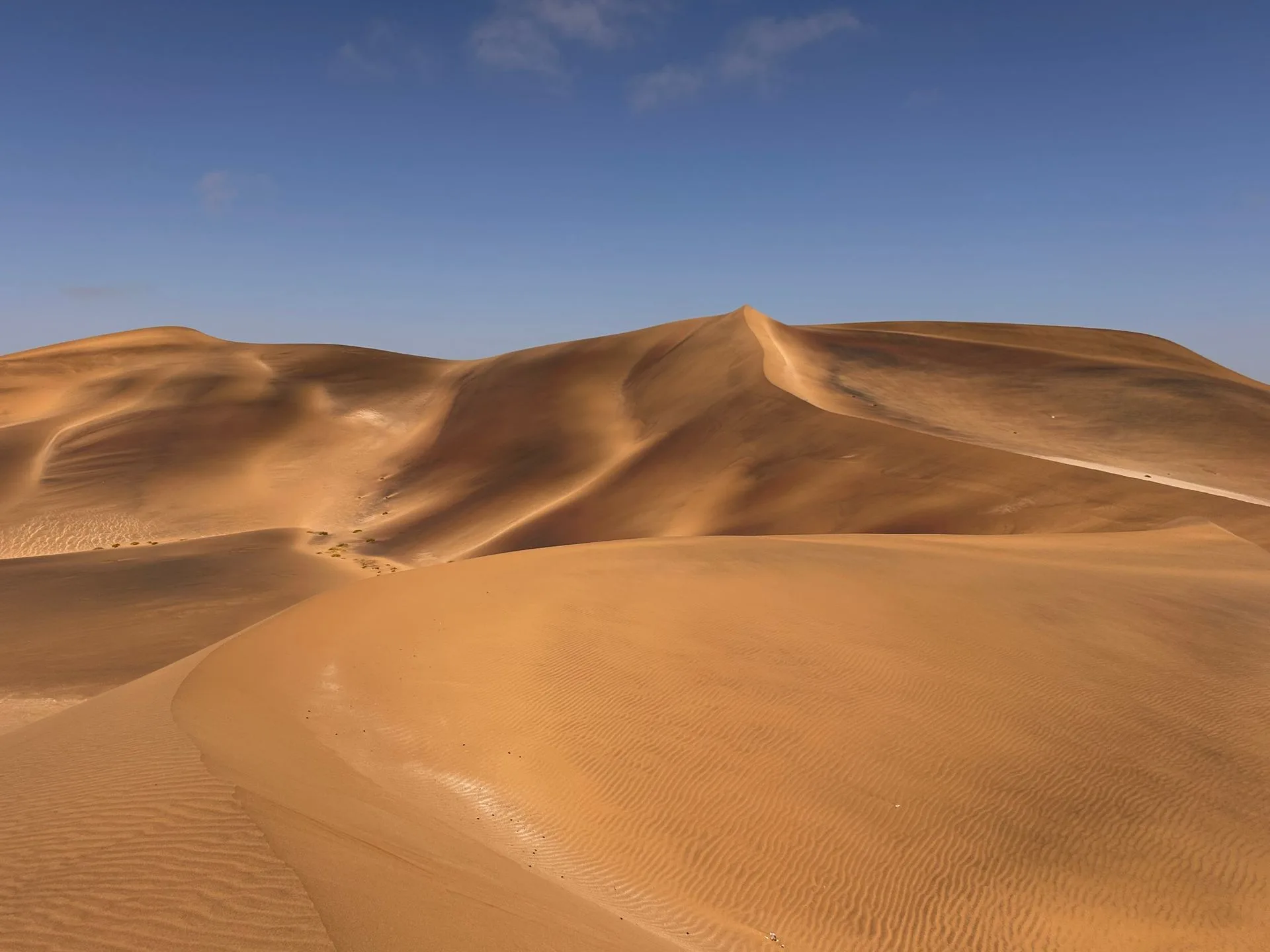
Sossusvlei's towering red sand dunes — the tallest in the world — are icons of African landscape photography. The contrast of russet dune against blue sky, and the ghostly white clay pan of Deadvlei with its 900-year-old camelthorn skeletons, produces images of almost surreal beauty.
Why Visit Namibia
Best Time to Visit Namibia
Namibia is a year-round destination. The dry season from May to October offers the best game viewing in Etosha as animals concentrate at waterholes. June and July are the coolest months (cold desert nights).
The "green season" from November to April brings occasional rain that transforms the landscape, attracts flamingos to Etosha Pan, and produces dramatic thunderstorm photography. Sossusvlei's dunes are spectacular year-round. The coast has a cool, foggy climate regardless of season.
What a Namibia Safari Costs
Namibia is one of Africa's best-value safari destinations, particularly for self-drivers. Car rental (4x4 with camping gear) costs $80-150/day. NWR (Namibia Wildlife Resorts) rest camps in Etosha cost $50-150/night. Campsites throughout the country run $10-30/night.
Mid-range lodges cost $150-400/night. Luxury desert lodges (Sossusvlei, Skeleton Coast) range from $400-2,000/night. A 14-day self-drive circuit covering Windhoek, Sossusvlei, Swakopmund, Damaraland, and Etosha costs $2,000-4,000 per person budget or $4,000-10,000 mid-range including car rental, fuel, accommodation, and park fees.
Getting to Namibia
Hosea Kutako International Airport (WDH) near Windhoek receives flights from Johannesburg (2hrs), Cape Town, Addis Ababa, and Frankfurt. South African Airways, Ethiopian Airlines, and Eurowings provide the main connections.
Most nationalities receive 90-day visa-free entry. Namibia has excellent road infrastructure and left-hand traffic. A 4x4 is recommended for gravel roads in Damaraland, Kaokoland, and some Etosha areas, though a standard sedan handles the main routes (Windhoek-Sossusvlei-Swakopmund-Etosha). Internal flights connect Windhoek to key destinations (1-2 hours).
Namibia Safari — Frequently Asked Questions
What is the best time to visit Namibia?
Namibia is a year-round destination. The dry season from May to October offers the best game viewing in Etosha as animals concentrate at waterholes. June and July are the coolest months (cold desert nights). The "green season" from November to April brings occasional rain that transforms the landscape, attracts flamingos to Etosha Pan, and produces dramatic thunderstorm photography. Sossusvlei's dunes are spectacular year-round. The coast has a cool, foggy climate regardless of season.
How do I get to Namibia?
Hosea Kutako International Airport (WDH) near Windhoek receives flights from Johannesburg (2hrs), Cape Town, Addis Ababa, and Frankfurt. South African Airways, Ethiopian Airlines, and Eurowings provide the main connections. Most nationalities receive 90-day visa-free entry. Namibia has excellent road infrastructure and left-hand traffic. A 4x4 is recommended for gravel roads in Damaraland, Kaokoland, and some Etosha areas, though a standard sedan handles the main routes (Windhoek-Sossusvlei-Swakopmund-Etosha). Internal flights connect Windhoek to key destinations (1-2 hours).
How much does a Namibia safari cost?
Namibia is one of Africa's best-value safari destinations, particularly for self-drivers. Car rental (4x4 with camping gear) costs $80-150/day. NWR (Namibia Wildlife Resorts) rest camps in Etosha cost $50-150/night. Campsites throughout the country run $10-30/night. Mid-range lodges cost $150-400/night. Luxury desert lodges (Sossusvlei, Skeleton Coast) range from $400-2,000/night. A 14-day self-drive circuit covering Windhoek, Sossusvlei, Swakopmund, Damaraland, and Etosha costs $2,000-4,000 per person budget or $4,000-10,000 mid-range including car rental, fuel, accommodation, and park fees.
What are the top things to see in Namibia?
Namibia is renowned for: Sossusvlei — world's tallest red sand dunes, Etosha National Park floodlit waterholes, Desert-adapted elephants in Damaraland, Skeleton Coast shipwrecks and seal colonies, Best self-drive safari destination in Africa, Dark sky stargazing — among Earth's least light-polluted skies. The exact wildlife and experiences depend on the season and specific areas you visit.
Can I book a Namibia safari through SafariSync?
Absolutely. SafariSync connects you with verified safari operators who run tours in Namibia. Submit an inquiry and our operators will craft a custom itinerary tailored to your dates, budget, and interests.
Why Trust This Guide
This guide is written and maintained by the SafariSync team in Arusha, Tanzania, drawing on our direct relationships with the operators and lodges we list.